English
 Nederlands
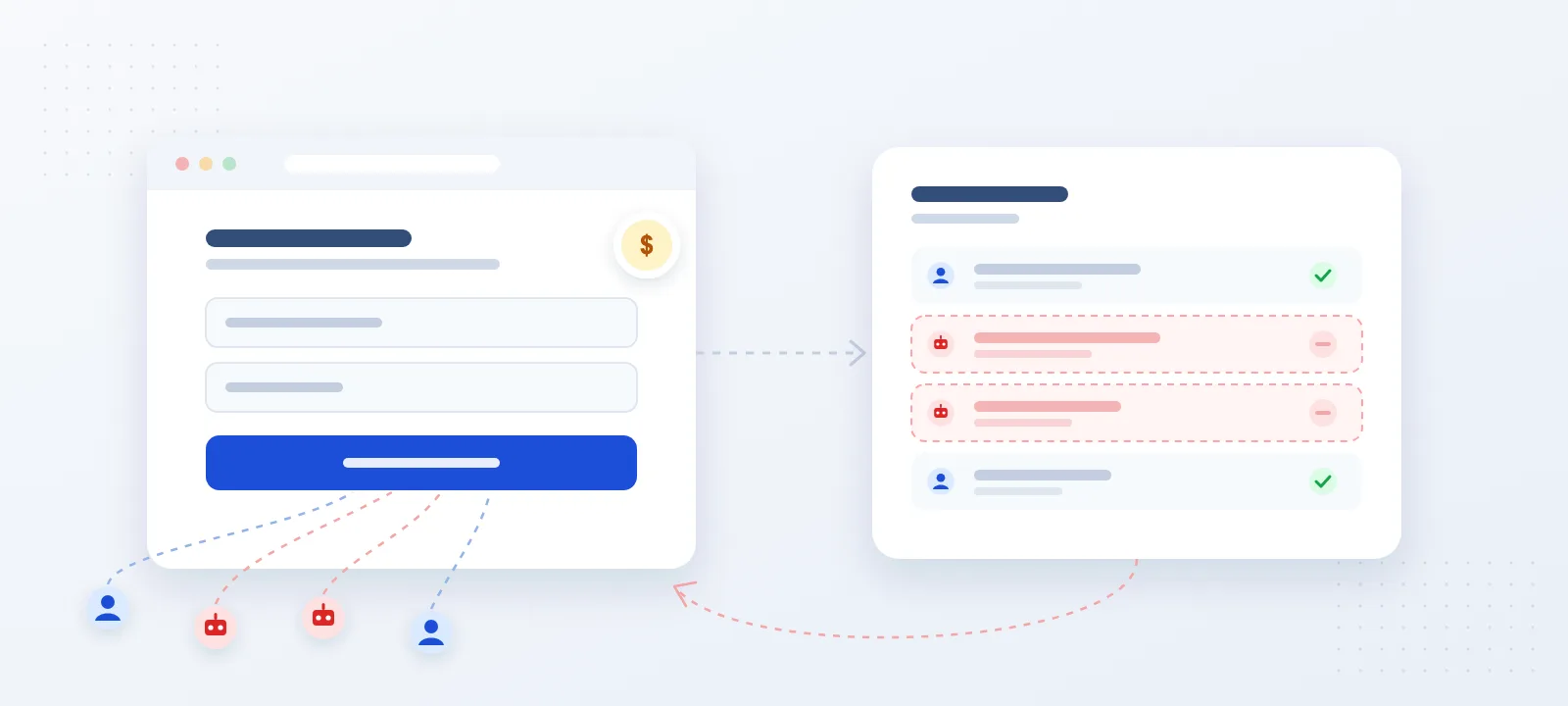
In Google Ads, SaaS companies face some of the highest per-click prices. A software category term in the US costs about $40 to $150, while a free trial sign-up or demo form, one of the cheapest actions available, is counted as a conversion. This makes click fraud costly in two ways. First, you pay for the invalid click. Then the resulting fake sign-up trains Smart Bidding to seek out similar visitors.
Written for founders and marketers managing paid search for a SaaS product, this guide explains why software companies are targeted, where fake sign-ups appear in the data, which fixes you can make yourself, and the role of a click fraud tool.
The cost of a click in software categories
Below are Google's average cost-per-click estimates for common software category searches. Both markets are shown in US dollars.
| Search query | US average CPC | UK average CPC |
|---|---|---|
| payroll software | $146.25 | $96.95 |
| hr software | $125.19 | $178.63 |
| help desk software | $104.29 | $84.95 |
| email marketing software | $92.00 | $53.74 |
| inventory management software | $90.46 | $67.64 |
| invoicing software | $74.92 | $82.14 |
| accounting software | $61.19 | $72.27 |
| time tracking software | $50.88 | $40.75 |
| project management software | $45.52 | $31.18 |
| crm software | $38.70 | $30.17 |
The calculation is simple at these prices. For most of these terms, the cost of two invalid clicks exceeds the €71 monthly price of ClickPatrol's Starter plan. See how click fraud protection costs compare across different tools.
Why SaaS is hit harder than most
- There is no charge to convert. Trial and demo forms require only an email address. Bots, competitors and click farm workers can complete them without spending a cent.
- Every sign-up feeds Smart Bidding. Sign-ups or demo requests are the bidding goal for most SaaS accounts. A fake submission is still recorded as a success, prompting the algorithm to search for more traffic with the same characteristics.
- Brand terms attract attention. Competitors bid for your name and may also click the brand ads protecting it, draining that budget. Learn how to prevent competitors from clicking your ads.
- The B2B audience is limited. If only a few hundred companies are potential buyers, even a handful of people clicking repeatedly represents a substantial part of your traffic.
- The budget spans multiple platforms. Software companies commonly advertise across Google, LinkedIn, Meta and Microsoft Ads simultaneously. Each one treats invalid traffic in a different way.
How to recognise fake sign-ups in your data
An invalid-click attack rarely looks obvious. Instead, the campaign appears to convert well in reports but delivers nothing inside the product. Look for these patterns:
- Google Ads records more trial sign-ups, but activated accounts, logins or product-qualified leads remain unchanged.
- People register with disposable email domains, random strings or personal addresses for a product aimed at businesses.
- Demo forms contain non-existent company names, unreachable phone numbers or details that have already been submitted.
- Registrations arrive in clusters at unusual hours or from countries where you do not sell.
- Cost per sign-up falls as cost per paying customer climbs. This often means Smart Bidding has located cheaper fake conversions.
The same warning signs for lead forms are covered in our junk leads guide.
Fixes you can make yourself
- Choose a deeper event for bidding. Send Google a conversion for an activated or qualified account rather than the initial sign-up. Because Google Ads can import conversions from your CRM, it can learn from accounts that your sales team would approve.
- Put obstacles in a bot's way, not a person's. Before opening the account, verify the email address, reject disposable domains and use a hidden field that only a bot completes. Fake accounts stay out of the product, although you have already paid for the click at that point.
- Block sources that return. You can exclude as many as 500 IP addresses per Google Ads campaign, while Performance Max supports an account-level list. Does Google protect against click fraud? sets out what Google filters and what remains your responsibility.
- Review platforms one by one. For each channel, compare clicks against analytics sessions rather than relying only on totals. Blended figures can easily conceal a discrepancy on a single platform.
What a click fraud tool brings to a SaaS account
Those fixes stop fake accounts from entering your product. A click fraud tool acts earlier by addressing the click and the signal used by your advertising platforms. For example, ClickPatrol:
- assesses each paid click using more than 800 data points, then excludes an invalid source's IP address from your Google Ads account, either by campaign or across the account for Performance Max;
- allows a conversion to count only if the visit is scored as real, giving Smart Bidding real sign-ups to learn from (read about protection for Smart Bidding);
- triggers the LinkedIn Insight Tag only for legitimate visitors, keeping bots outside your LinkedIn audiences, while creating audience exclusions for Meta and Microsoft Ads;
- protects one brand across every supported advertising platform with the Starter plan.
For B2B software sold through demo requests, B2B SaaS click fraud protection tracks a paid click from the ad through to the demo form, across Google Ads and LinkedIn.
To put the scale in context, ClickPatrol data from Dutch campaigns found that 8 to 9 percent of paid clicks were not real. Emerce published the data in October 2026. At $100 per click, that proportion soon becomes expensive. Before blocking anything, the 7-day trial measures the traffic in your own account.
Sources
- Average cost per click figures come from Google Ads keyword data for the US and the UK, accessed through DataForSEO on 23 November 2026.
- IP address exclusion guidance from Google Ads Help, accessed 23 November 2026.
- Data on click fraud in the Netherlands comes from ClickPatrol and was published by Emerce on 28 October 2026. It is summarised in the breakdown of click fraud by ad network.
- Details of ClickPatrol's plans and features are available on the plans and pricing page and the page about click fraud protection for Google Ads.