No. As reported by Emerce in October 2026, the 21.4% rise, the 8 to 9 percent share and the network ranking are ClickPatrol data for Dutch campaigns. Other markets can look different. See the 2026 click fraud statistics overview for international studies and global estimates.
-
Solutions
-
 Click Fraud Protection
Block invalid clicks across every ad channel.
-
 Smart Bidding Protection
Feed Google clean, human-only signals.
-
 Clean Remarketing Audiences
Exclude suspicious traffic from your lists.
-
 All Features
Every ClickPatrol feature in one place.
-
 E-commerce & Retail
Protect shopping campaigns and product feeds.
-
 Service Providers
Stop wasted spend on local & lead-gen ads.
-
 Marketing Agencies
Classify, protect and train every client account.
-
 All Industries
Browse click fraud protection by industry.
-
 Small Business
Affordable protection that pays for itself.
-
 Enterprises
Scale protection across brands & accounts.
-
 Regional Companies
Keep local budgets on real, nearby buyers.
-
 Multinationals
Consistent protection across every market.
-
-
Agencies
-
For Agencies
Classify, protect and train every client account.
-
 Partner Program
Earn 15 to 25% recurring commission on linked clients.
-
 Case Studies
21 UK agencies unlocked over 6% media savings.
-
-
Resources
-
What is Click Fraud?
Learn what fake PPC clicks are and why they matter.
-
 Bot Traffic
Detect and block non-human clicks.
-
 Competitor Fraud
Stop rivals draining your budget.
-
 Sophisticated Fraud
Catch SIVT that native filters miss.
-
 Click Farms
Stop coordinated low-quality click operations.
-
 Invalid Traffic
Block every click that never converts.
-
 Help docs
How to connect Google Ads, GTM and other ad channels.
-
 FAQ
Answers to the most common questions.
-
 Blog
Articles and guides from our expert team.
-
 Comparisons
ClickPatrol vs ClickCease and other tools.
-
 Tools
Free tools by ClickPatrol & Friends.
-
 About ClickPatrol™
Who we are and our mission.
-
Case Studies
Why agencies and businesses use ClickPatrol.
-
 Customer Reviews
Reviews and success stories from customers.
-
Partner Program
Join our affiliate & partner program.
-
 Contact us
Talk to our team about your ad traffic.
-
- Pricing
Click fraud by ad network: 2026 Dutch data
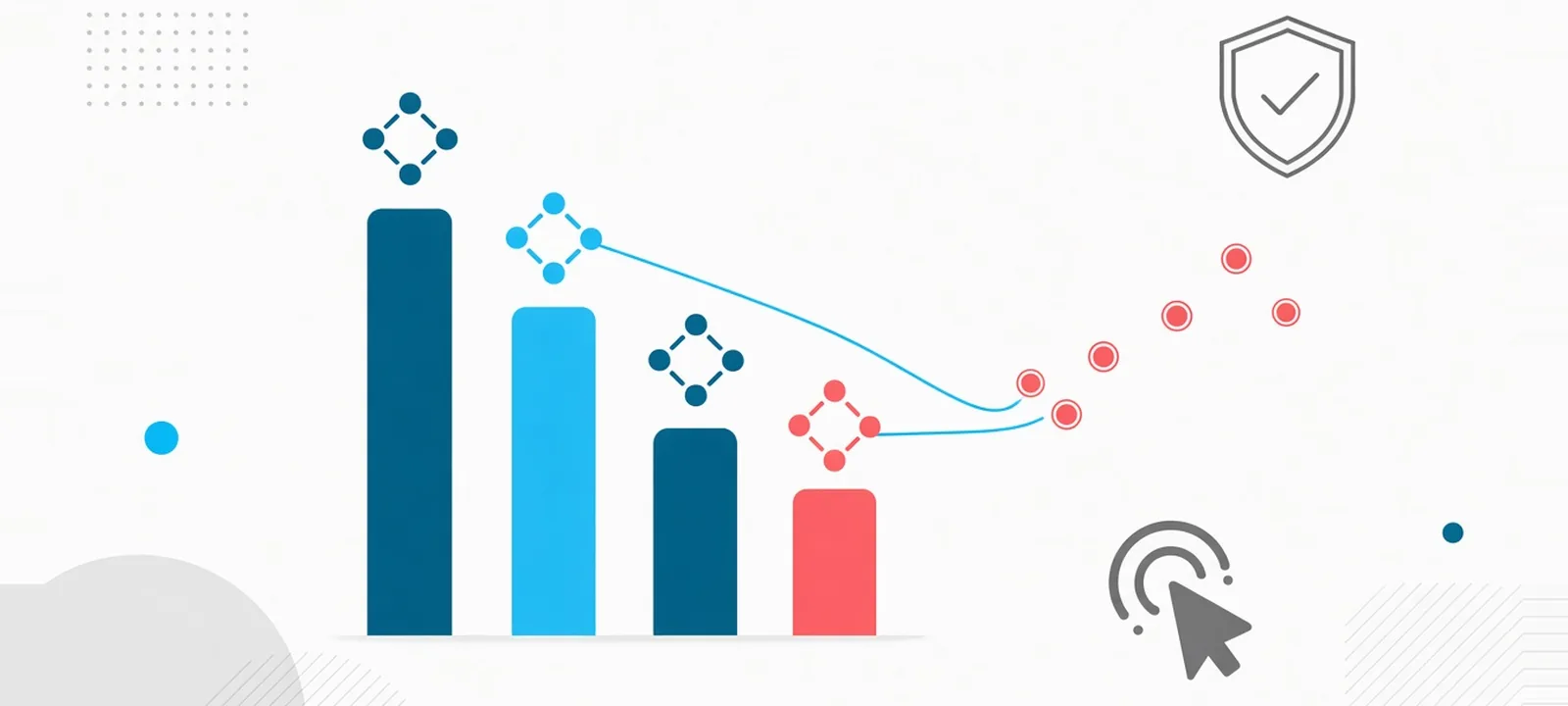
Ad networks do not carry click fraud in equal measure. ClickPatrol data for the Netherlands, published by Emerce on 28 October 2026, shows Google sending the best traffic, while TikTok ranks third and OpenAI Ads fourth for the worst-quality traffic. Across all paid channels, 8 to 9 percent of paid clicks are not real. Click fraud cases rose 21.4% in a year.
Those findings are set out here, network by network: what the ranking says, where the numbers come from, what the damage costs, and who is clicking. They come from an interview Emerce journalist Erwin Boogert held with ClickPatrol founder Ardan Bousché. The quotes are translated from Dutch.
How much click fraud is there in the Netherlands?
Between October 2025 and October 2026, the number of click fraud cases on online ads in the Netherlands rose 21.4%. The figure counts cases, not a share of clicks.
The share of invalid traffic stands apart from that case count. Across all paid channels ClickPatrol monitors, 8 to 9 percent of paid clicks in the Netherlands are not real. Close to one in ten ad clicks, Bousché says, are dirty or low quality: the advertiser pays for them and gets nothing back.
| Metric | Value | Scope |
|---|---|---|
| Growth in click fraud cases | 21.4% | From October 2025 to October 2026, Netherlands |
| Paid clicks that are not real | 8 to 9% | All paid channels, Netherlands |
| Google Ads clicks analysed | About 18 million per month | Among Dutch advertisers, from energy companies to local supermarkets |
| Increase in bad traffic from Meta | 30 to 40% versus last year | Impressions form the basis of this estimate |
For figures from other studies and the global picture, see our 2026 click fraud statistics.
Which ad networks send the worst traffic?
ClickPatrol ranks ad networks on the quality of the traffic they send to Dutch campaigns. Google comes out best. Facebook and OpenAI Ads deliver what Bousché calls downright bad traffic. TikTok is the third-largest supplier of poor-quality traffic, and OpenAI the fourth.
| Network | Position in ClickPatrol data | What the data shows |
|---|---|---|
| Google Ads | Best traffic quality | Mostly always-on campaigns, with raw click data from Google |
| Meta (Facebook) | Downright bad traffic | Estimated from impressions, bad traffic 30 to 40% higher than last year |
| TikTok Ads | Third for worst-quality traffic | A place ahead of OpenAI Ads |
| OpenAI Ads (ChatGPT Ads) | Fourth for worst-quality traffic | On the market for a short time only |
The Emerce article names positions three and four. It does not name the networks in first and second place, so we do not fill them in here. TikTok and OpenAI get a rank in that article, not a separate click fraud rate per network.
OpenAI got there fast. Its ad platform has only just started, and Bousché calls it notable that a service this new already sits fourth. If you are testing it, read how to monitor ChatGPT Ads click fraud before the test budget runs out. See TikTok Ads click fraud for TikTok.
Why is the Meta figure an estimate?
Meta shares impressions with ClickPatrol, though not clicks. So ClickPatrol has to estimate how many Meta clicks are truly bad, and the 30 to 40% increase rests on that estimate. The judgement that Facebook delivers downright bad traffic rests on that estimate too.
Here, Google works differently. "Google provides us with its raw data. That is why it is no longer guessing, but calculating. Other parties are not as transparent," Bousché told Emerce.
Usage patterns differ too. Advertisers switch Meta on for a promotion and off again afterwards, as Bousché sees it, while Google campaigns tend to run continuously. Meta does not hand over click-level data, so ClickPatrol classifies each visitor on your own website and you exclude the suspicious audience from your ad sets. More detail on that approach: Meta Ads click fraud.
What does click fraud cost Dutch advertisers?
Overpaid Google Ads clicks cost the average SMB advertiser in the Netherlands between €1,400 and €6,500 a year. For multinationals, the damage can run to tens or even hundreds of thousands of euros a year.
Two caveats come with those amounts. They are based on ClickPatrol's own calculations and on the feedback Google gives. They apply to Google Ads, so they cannot be compared one-to-one with the cost of click fraud on other platforms.
Getting money back is possible, but not guaranteed. A client Bousché mentioned received "twee ton", roughly two hundred thousand euros, back from Google last year. That is one case, not a typical result. Historically, only a small share of submitted manual claims ends in a monetary credit, and Google applies its own definition of invalid activity. For how credits and refunds work, see Google Ads refunds for invalid clicks.
How do bot clicks pollute look-alike audiences?
Only part of the damage is the direct loss. When bots click, they tell the platform's algorithm that a campaign works. The advertiser then expands the audience with look-alikes of exactly those clickers.
A shop pays twice. First it pays for the invalid clicks, then it pays again to reach similar audiences that are fake or of poor quality. Genuinely interested visitors stay out of sight. Fewer sales come in, and the damage grows.
Wrong decisions also follow when numbers are polluted. As Bousché sees it, companies switch off campaigns that are sound at the core but have been contaminated by invalid traffic. Only good analysts, in his words, recognise that and correct course.
Who is behind the invalid clicks?
Bousché distinguishes several profiles among the parties clicking on ads in Dutch campaigns.
- Analysis tools. Software that clicks ads on competitive keywords to see how a competitor performs. Each click costs the advertiser money, and the daily budget drains faster.
- AdSense site owners. "Through Google AdSense, a site owner can receive up to around sixty percent of the click price, which creates sites that attract nothing but bots to click on ads."
- Home-built AI agents. Agents click the top links on Google to collect information, whether or not those links are ads. Google does act against this in Europe, Bousché notes.
Where the traffic comes from is telling as well. A Russian keyboard layout ranks sixth in Dutch campaigns, at around 7% of keyboards. That trait does not fit the advertiser's target audience, according to ClickPatrol. "Belgian and French keyboards record lower percentages." See what invalid traffic is for the difference between general and sophisticated invalid traffic.
How was this data collected?
For media and advertising agencies, ClickPatrol monitors traffic quality across paid channels, from Google and Meta to Reddit and TikTok. Coverage on the Google side is about 18 million Google Ads clicks per month to Dutch websites. "We supplement Google's data with eight other sources and our own data to benchmark," Bousché told Emerce.
Every figure in this article is ClickPatrol data for the Netherlands. None of it is a worldwide average. The Meta numbers are estimates, since Meta shares impressions and not clicks. The euro amounts come from ClickPatrol's calculations and from Google's feedback.
Bousché also sees a shift in how advertisers look at platform reporting. They relied on the numbers from Google and Meta for a long time. More of them now realise that those platforms cannot offer independent data about their own traffic.
What should advertisers do with these numbers?
Treat each network as its own risk. A blended click fraud rate hides this fact: a TikTok or OpenAI Ads click carries a different risk from a Google Search click. Some practical steps:
- Measure traffic quality per network with one method, so a click on ChatGPT Ads can be compared on equal terms with a click on Google, Meta or TikTok.
- Before you scale a look-alike audience, check where it is seeded. The expansion copies the bot clicks if the seed contains them.
- Check whether invalid traffic is distorting the numbers before you switch off a campaign that underperforms.
- Keep your own records of invalid clicks on Google Ads so you can file claims, knowing that Google decides on each one.
- Test new networks such as OpenAI Ads with monitoring from the first click, rather than after the budget is spent.
ClickPatrol scores every paid click on 800+ data points. On Google Ads it blocks invalid sources in real time. On Meta, TikTok and other networks it classifies visitors so you can exclude the suspicious audience, and it monitors traffic quality on OpenAI Ads. The click fraud protection page shows how that works.
Source
Emerce, "Klikfraude in Nederland stijgt 21%, OpenAI Ads al in de top vier", by Erwin Boogert, 28 October 2026, based on an interview with ClickPatrol founder Ardan Bousché. Read the article on Emerce (in Dutch). Our press page carries more coverage.
Frequently Asked Questions
Do these click fraud figures apply outside the Netherlands?
Is it safe to test OpenAI Ads with this ranking in mind?
A test of a new channel can still make sense, but measure traffic quality from the first click. In ClickPatrol data for the Netherlands, OpenAI Ads already ranks fourth for worst-quality traffic, while Ads Manager only shows aggregate click totals. Because ClickPatrol monitors OpenAI Ads traffic, you can judge each click before raising the budget.
Can ClickPatrol block invalid clicks on Meta and TikTok?
Not in the same way as on Google Ads. ClickPatrol blocks invalid sources in real time on Google Ads. On Meta and TikTok, ClickPatrol classifies every visitor on your website and you exclude the suspicious audience from your campaigns, so those visitors stop seeing your ads and stop feeding the algorithm.
Will Google refund invalid clicks I report?
Sometimes. On every claim, Google decides and applies its own definition of invalid activity. Historically, only a small share of submitted manual claims results in a monetary credit. Automatic credits for clicks Google itself filters show up separately in your billing. ClickPatrol data helps you document claims, though no outcome is guaranteed.

Written & reviewed by
Abisola Tanzako
Content Manager, ClickPatrol (click fraud & invalid-traffic specialist)
Abisola covers bot traffic, ad fraud and PPC protection, drawing on ClickPatrol platform data from 1,793+ businesses.
Last updated: 29 October 2026