
Classify
01Every click on your ads is scored on 800+ data points in real time and classified as legitimate, suspicious or fake, from obvious bots to fraud built to look human.
 Click Fraud Protection
Block invalid clicks across every ad channel.
 Smart Bidding Protection
Feed Google clean, human-only signals.
 Clean Remarketing Audiences
Exclude suspicious traffic from your lists.
 All Features
Every ClickPatrol feature in one place.
 E-commerce & Retail
Protect shopping campaigns and product feeds.
 Service Providers
Stop wasted spend on local & lead-gen ads.
 Marketing Agencies
Classify, protect and train every client account.
 All Industries
Browse click fraud protection by industry.
 Small Business
Affordable protection that pays for itself.
 Enterprises
Scale protection across brands & accounts.
 Regional Companies
Keep local budgets on real, nearby buyers.
 Multinationals
Consistent protection across every market.
For AgenciesClassify, protect and train every client account.
 Partner Program
Earn 15 to 25% recurring commission on linked clients.
 Case Studies
21 UK agencies unlocked over 6% media savings.
What is Click Fraud?Learn what fake PPC clicks are and why they matter.
 Bot Traffic
Detect and block non-human clicks.
 Competitor Fraud
Stop rivals draining your budget.
 Sophisticated Fraud
Catch SIVT that native filters miss.
 Click Farms
Stop coordinated low-quality click operations.
 Invalid Traffic
Block every click that never converts.
 Help docs
How to connect Google Ads, GTM and other ad channels.
 FAQ
FAQAnswers to the most common questions.
 Blog
BlogArticles and guides from our expert team.
 Comparisons
ClickPatrol vs ClickCease and other tools.
 Tools
ToolsFree tools by ClickPatrol & Friends.
 About ClickPatrol™
Who we are and our mission.
Case StudiesWhy agencies and businesses use ClickPatrol.
 Customer Reviews
Reviews and success stories from customers.
Partner ProgramJoin our affiliate & partner program.
 Contact us
Talk to our team about your ad traffic.
Click fraud protection detects and blocks invalid clicks (bots, competitors and scrapers) before they drain your budget. ClickPatrol™ analyses every click in real time across Google, Meta, Microsoft, Performance Max, TikTok and LinkedIn Ads, automatically blocking fake traffic so up to 20% of wasted spend goes back to reaching real customers.




Every click on your ads is scored on 800+ data points in real time and classified as legitimate, suspicious or fake, from obvious bots to fraud built to look human.
Invalid sources are excluded in your ad account automatically, so they cannot click again. Your daily budget keeps reaching real potential customers.
Conversion signals fire only for visitors classified as legitimate, so Smart Bidding retrains on real buyers and your remarketing audiences stay clean.











Click fraud protection is software that automatically detects and blocks invalid clicks on your paid ads: the clicks that come from bots, click farms, competitors and scrapers instead of real potential customers. Rather than paying for traffic that never converts, you keep your budget focused on genuine prospects, and your analytics stay clean enough to make good decisions. The thing being blocked is click fraud: a billed PPC click with no intent to buy, produced so a publisher, affiliate or rival benefits from the charge. On detection method, platform coverage and price, our click fraud protection software comparison puts seven tools side by side. Compare vendors before you choose.
Across the 1,793+ businesses ClickPatrol™ protects, invalid traffic regularly accounts for 10-20% of paid clicks, and can exceed 20% in competitive, high-CPC verticals. That is budget recovered the moment protection is switched on.












ClickPatrol™ protects paid traffic wherever you spend, blocking invalid clicks and fake engagement in real time across all your acquisition channels.
Search, Display and YouTube. Automatically block bots, competitors and repeat offenders from your Search and Display campaigns.
Facebook & Instagram. Filter invalid clicks and bot engagement so your budget reaches real people, not click farms.
Protect your Microsoft Advertising campaigns from the same invalid traffic that drains Google Ads budgets.
Keep PMax Smart Bidding learning from real conversions by feeding it clean, bot-free signals.
Stop invalid taps and bot traffic from inflating your TikTok campaign metrics and wasting spend.
Protect high-CPC B2B campaigns so your budget reaches genuine decision-makers, not automated traffic.
Detect low-quality and fraudulent affiliate clicks so you only pay partners for real, engaged visitors.

Create your account in seconds. Credit card required for verification only (€0.01). No code required.
One-click integration with Google, Meta, Microsoft, Performance Max, TikTok and LinkedIn Ads.
Every click is analysed in real time and invalid sources are blocked 24/7 once you activate a Traffic Security plan.
How do you prevent click fraud? Block invalid sources in real time, and keep the data those clicks leave behind out of your bidding and remarketing. One without the other keeps costing money: a blocked IP still sits in your audiences, and a fake conversion still teaches Smart Bidding to buy more of the same. These practices cover both halves.
Monitor the patterns that give fraud away. High CTR with flat conversions, sudden click spikes, instant bounces and repeat visits from one IP range are the earliest warning signs. Check them weekly at minimum.
Use IP exclusions, and know where they stop. Manual exclusion lists in Google Ads block repeat offenders, but bots rotate through VPNs and residential proxies faster than any list is maintained. Our step-by-step IP exclusion guide covers the setup.
Do not treat frequency capping as click fraud protection. Google Ads only caps impressions on Display and Video, and a bot that resets cookies never hits the limit. Frequency capping in Google Ads shows where the setting lives and what it misses.
Tighten geo-targeting. Serve ads only where you can actually sell, and exclude regions that send clicks but never customers.
Guard your conversion data. Smart Bidding trains on every conversion it receives. Filter bot conversions out before they reach the algorithm, or it optimises toward the fraud instead of away from it.
Keep remarketing audiences clean. Bots that click once get remarketed to for months. Filtering them out of your audiences stops the second wave of wasted spend.
Audit campaigns on a schedule. Review placements, search terms and traffic sources, and compare CTR against conversion rate per source. Discrepancies point at invalid traffic and at budget you can reclaim.
Automate the block. Protection software like ClickPatrol scores every click on 800+ data points and applies the exclusion in real time, which is the part no manual routine can match.
Every invalid click ClickPatrol blocks is budget kept for real prospects. You see exactly where waste is happening from day one.

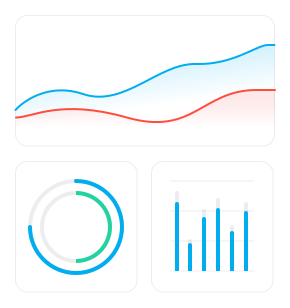

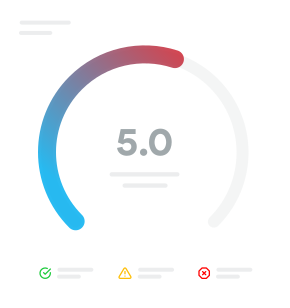
Remove bot traffic from your analytics. Stop optimizing campaigns based on fake engagement that drives your CPA up.
Competitor and repeat-offender clicking adds up fast. ClickPatrol spots the patterns and blocks them before they drain your budget or pollute your data.
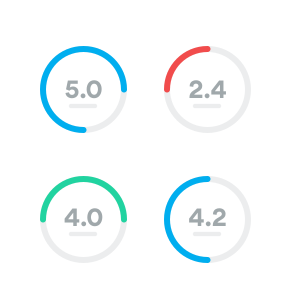
40-70% fewer junk leads means your sales team only handles real prospects worth pursuing.
Build audiences from real visitors, not bots inflating your costs and destroying your retargeting ROI.
Ad Campaigns protected
Countries
Monthly clicks monitored
Businesses protected

Pros: Gives full transparency into traffic sources. Detects bots, VPNs, and duplicate clicks. Easy to customize the blocking settings.

I really like how simple and easy the interface is to use. There’s no clutter or confusing sections, so everything feels clear and straightforward. It also shows fraudulent clicks and how much money you’re saving in a very transparent way. I’d definitely recommend it to any digital marketing team.
What do you like best about ClickPatrol? ClickPatrol was incredibly easy to set up it started monitoring our ad campaigns within minutes. The dashboard is clean and gives a clear view of where clicks are coming from. I love how it automatically detects suspicious or bot-like clicks and sends...
If 15% of your traffic is invalid, roughly €15 of every €100 you spend is wasted before a real prospect ever sees your ad. On a €10,000/month budget that is €1,500 going straight to bots, competitors and scrapers.
Every invalid click ClickPatrol™ blocks keeps more budget available for real prospects who can actually convert.

ClickPatrol™ is fully compliant with GDPR and CCPA. Trusted by Google as a certified click tracker.
Our servers in the EU, US and other regions meet the highest international security standards: 27001, 27018, 27701, 22301, 9001 and CSA STAR CCM v4.0.

Trusted by 1,793+ businesses across Europe, Africa and the US.
Businesses protected by ClickPatrol™


Start my free 7-day trial and see exactly how much invalid traffic is costing you across every channel. Setup takes under 1 minute.
Request a free, no-obligation demo.
