Frequency capping is a limit on how many times one person can be shown the same advertising within a set period. Most impression-based platforms offer a version of it. Google Ads applies the limit per day, week or month, and counts impressions rather than clicks.
-
Solutions
-
 Click Fraud Protection
Block invalid clicks across every ad channel.
-
 Smart Bidding Protection
Feed Google clean, human-only signals.
-
 Clean Remarketing Audiences
Exclude suspicious traffic from your lists.
-
 All Features
Every ClickPatrol feature in one place.
-
 E-commerce & Retail
Protect shopping campaigns and product feeds.
-
 Service Providers
Stop wasted spend on local & lead-gen ads.
-
 Marketing Agencies
Classify, protect and train every client account.
-
 All Industries
Browse click fraud protection by industry.
-
 Small Business
Affordable protection that pays for itself.
-
 Enterprises
Scale protection across brands & accounts.
-
 Regional Companies
Keep local budgets on real, nearby buyers.
-
 Multinationals
Consistent protection across every market.
-
-
Agencies
-
For Agencies
Classify, protect and train every client account.
-
 Partner Program
Earn 15 to 25% recurring commission on linked clients.
-
 Case Studies
21 UK agencies unlocked over 6% media savings.
-
-
Resources
-
What is Click Fraud?
Learn what fake PPC clicks are and why they matter.
-
 Bot Traffic
Detect and block non-human clicks.
-
 Competitor Fraud
Stop rivals draining your budget.
-
 Sophisticated Fraud
Catch SIVT that native filters miss.
-
 Click Farms
Stop coordinated low-quality click operations.
-
 Invalid Traffic
Block every click that never converts.
-
 Help docs
How to connect Google Ads, GTM and other ad channels.
-
 FAQ
FAQ
Answers to the most common questions.
-
 Blog
Blog
Articles and guides from our expert team.
-
 Comparisons
ClickPatrol vs ClickCease and other tools.
-
 Tools
Tools
Free tools by ClickPatrol & Friends.
-
 About ClickPatrol™
Who we are and our mission.
-
Case Studies
Why agencies and businesses use ClickPatrol.
-
 Customer Reviews
Reviews and success stories from customers.
-
Partner Program
Join our affiliate & partner program.
-
 Contact us
Talk to our team about your ad traffic.
-
- Pricing
Frequency capping in Google Ads: the limits
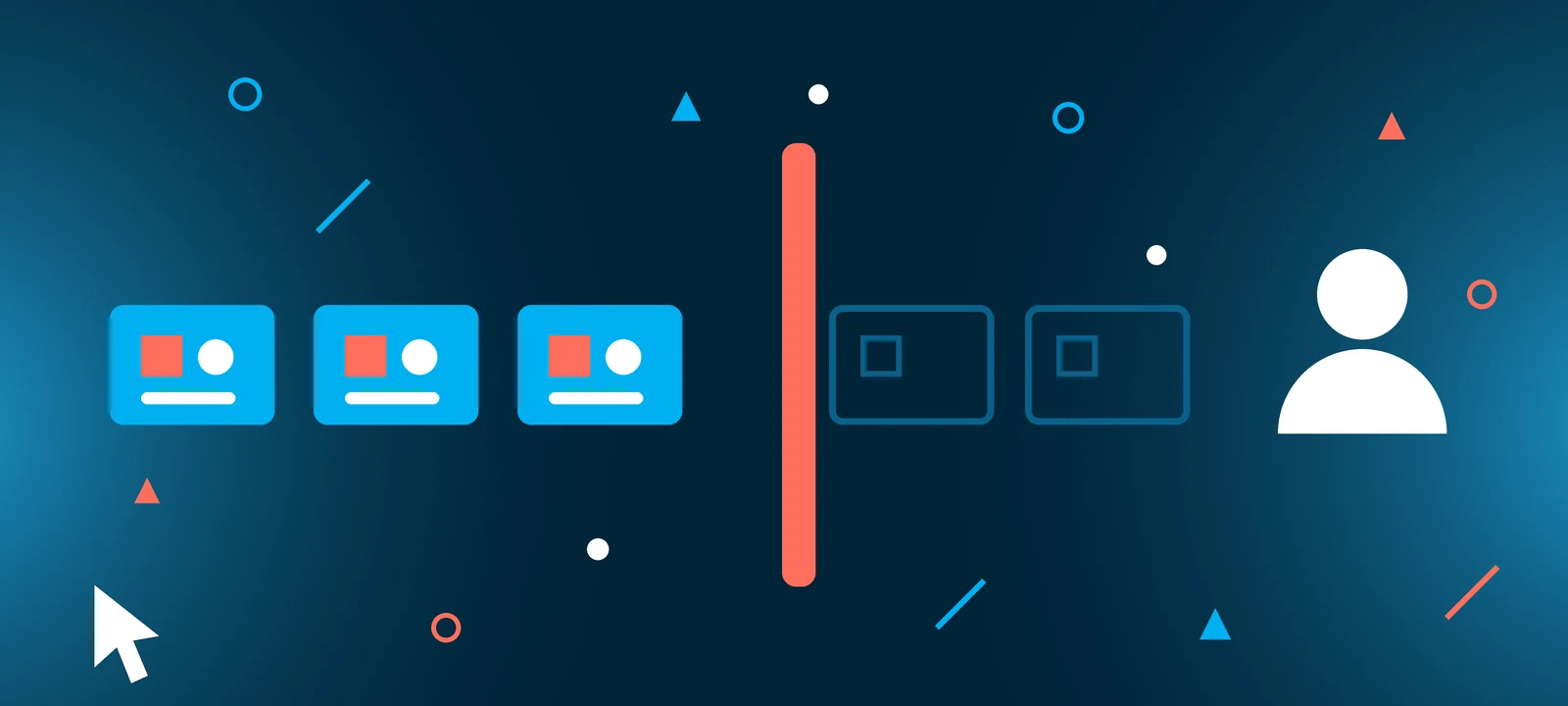
Frequency capping in Google Ads limits the number of times one person sees your ads. You choose a cap per day, week or month. The setting is available only for Display and Video campaigns. It counts impressions, so it controls ad exposure rather than how many times somebody clicks.
This difference explains why the setting often falls short of expectations. A cap prevents creative fatigue among a real audience. It was not designed to stop an automated visitor that appears as a new person in every session, and Search offers no cap in the first place.
Which Google Ads campaigns support frequency capping?
Only two campaign types provide a genuine frequency setting. Google Ads Help is explicit that Demand Gen does not support frequency capping. Search, Shopping and Performance Max have no such control either.
| Campaign type | Frequency control | Level it applies to |
|---|---|---|
| Display | Impressions per day, week or month, or let Google Ads manage frequency for you | Campaign, ad group or ad |
| Video | Impressions, views, or both, per day, week or month | Campaign only |
| Demand Gen | None. Google manages frequency automatically | Not applicable |
| Search, Shopping, Performance Max | None | Not applicable |
Reporting covers more campaign types than the control itself. Reach and frequency metrics are available for Display, Demand Gen, Video and App campaigns. This means you can inspect frequency for Demand Gen, even though you cannot set a cap there.
How to set a frequency cap on a Display campaign
You will not see this option during campaign creation. It becomes available after the campaign exists, inside Frequency management.
- In the Campaigns menu, open Campaigns.
- Open the Settings tab and choose the Display campaign where you want to apply the cap.
- Open Additional settings.
- Choose Frequency management. You can then let Google Ads handle frequency or enter a limit per day, week or month.
- Save.
A Display cap may apply at campaign, ad group or ad level. If two caps are active at the same time, the stricter limit determines delivery. Display caps count only viewable impressions, which is the reason a frequency report and the cap behind it can disagree.
How does frequency capping work on YouTube?
For Video campaigns, caps apply only at campaign level. You decide whether they count impressions, views, or both. The controls appear under Additional settings as Cap impression frequency or Cap view frequency.
For Video frequency, Google identifies a signed-in viewer by their account and a signed-out viewer by device. All formats within the campaign use the same cap: skippable in-stream, non-skippable in-stream, bumper, in-feed and Shorts. If you reuse that video in another Video campaign, only in-stream and bumper activity from the second campaign counts towards the cap on the first campaign.
Target frequency is separate and is easily confused with a cap. This Video reach campaign subtype asks for a weekly or monthly frequency, then Google optimises delivery towards that figure. It is a delivery target, not a ceiling. Fraudulent activity on video placements is covered separately in YouTube Ads click fraud.
How do you calculate ad frequency?
To calculate average ad frequency, divide impressions by unique users. If a Display campaign delivered 40,000 impressions across 10,000 unique users, it had an average frequency of 4.
Manual calculation is seldom necessary. Google Ads provides the figures in its reach and frequency columns, including Unique users, Avg. impr. freq. per user, and that same average across seven-day and thirty-day windows. The following three reporting limits affect how you should read those columns:
- Reach metrics cover no more than 92 days.
- Frequency distribution data is available only when the selected date range is 31 days or less.
- Reach and frequency figures are modelled and may arrive up to three days late. As a result, a last-seven-days view does not yet contain the whole week.
What is a good frequency cap?
Google does not publish a target figure, and another advertiser's account cannot tell you the right number for yours. Use your own frequency distribution instead. Google Ads separates it into buckets for users reached 1+, 2+, 3+, 4+, 5+ and 10+ times.
Compare cost and conversions across the buckets. Suppose the 10+ bucket accounts for a substantial share of impressions but converts no better than the 3+ bucket. That additional exposure is paid repetition, so a cap recovers its cost. If conversion performance continues to rise with frequency, applying a cap removes sales rather than protecting budget.
Why is average frequency higher than my cap?
The cap and the report measure different sets of events. For Display campaigns, only viewable impressions contribute to the frequency cap. Frequency reporting includes both viewable and unviewable impressions.
For that reason, a campaign limited to three impressions per user per day may still show an average frequency above three. This does not indicate a fault. The report includes events that sit outside the cap's count.
What frequency capping does not stop
A cap works only while Google can recognise the person being counted. Display frequency relies on third-party cookies when available, then uses first-party cookies to estimate impressions. Video frequency relies on either the signed-in Google account or the device. Once that identity is reset, the count returns to zero.
Resetting identity is routine for bot traffic. A script may clear cookies after each session, rotate through a proxy pool, or start every visit with a fresh browser profile. Each visit then looks like a different user and never reaches your chosen limit. The cap behaves as intended, but repeatedly records a count of one.
There are also two structural gaps:
- The cap applies to impressions rather than clicks. A visitor can remain within a three-impression limit and click the ad each time.
- Search offers no frequency cap, despite being the campaign type where most advertisers place their largest budget.
Wasted impressions are not the only cost. Smart Bidding learns from the people who interact with your ads. When an audience repeatedly returns with a fresh identity, those interactions train the system to seek more users with the same profile.
How to cap click frequency per IP
Click frequency needs a control that counts clicks. ClickPatrol provides one through a Click Threshold rule. You choose the number of clicks permitted from one IP address during a set time window, and ClickPatrol automatically blocks an IP when it breaches any rule. The dashboard supports up to five rules at once under Configuration and then Settings.
One practical setup pairs a short burst rule, such as three clicks in ten minutes, with a broader daily rule for a repeat clicker who spaces out their activity, such as five clicks in one day. Set realistic limits. Legitimate buyers sometimes click the same ad twice, and an overly strict limit blocks those people as well.
There is another answer for impressions, applied before counting begins. When you connect a Google Ads account, ClickPatrol adds its database of known bot servers, scrapers and invalid IP addresses to the exclusion list. Those sources therefore do not see the ad. This proactive layer typically saves between 0.4% and 0.9% of ad spend immediately, independently of later savings from reactive blocking.
Display inventory is where repeated exposure most often overlaps with poor-quality placements, which is why the Google Display Network receives separate coverage. To see how the blocking layer operates across Search, Display and Video together, read click fraud protection. Advertisers managing Display and Video at scale can compare configurations on the enterprise plan for brands.
Sources: Google Ads Help, Frequency capping: Definition, Measuring reach and frequency, Create a Video reach campaign and About Target frequency. Checked 31 August 2026.
Frequently Asked Questions
What is frequency capping in advertising?
What is effective frequency in advertising?
Effective frequency is the number of exposures a person needs before an ad changes what they think or do. It is a media-planning judgement, not a Google Ads setting. Google Ads reports how many users saw your ads 1+, 2+, 3+, 4+, 5+ and 10+ times, and leaves the threshold to you.
How do you increase ad frequency in Google Ads?
Google Ads has no setting that raises frequency on Display, so you reach the same people more often by narrowing the audience or raising the budget. Video reach campaigns are the exception: the Target frequency subtype takes a weekly target of 2 to 7, or a monthly target of 4 to 12, for multi-format ads.
Does LinkedIn Ads have a frequency cap?
LinkedIn offers frequency cap management on ad sets that use the brand awareness objective, across the LinkedIn feed, LinkedIn Audience Network and Connected TV. The custom range is 3 to 30 impressions per member account over seven days. Other objectives leave frequency to LinkedIn's own delivery.
How do you cap frequency on remarketing campaigns?
Display remarketing runs inside a Display campaign, so it uses the same control: Frequency management under Additional settings, with a limit per day, week or month. Remarketing audiences are smaller than prospecting audiences, so the same budget produces a higher average frequency.
What is the difference between reach and frequency?
Reach is the number of unique users who saw your ads. Frequency is how many times each of them saw them, on average. Google Ads reports both, with reach metrics covering a maximum of 92 days and the frequency distribution breakdown limited to ranges of 31 days or less.
Written & reviewed by
Abisola Tanzako
Content Manager, ClickPatrol (click fraud & invalid-traffic specialist)
Abisola covers bot traffic, ad fraud and PPC protection, drawing on ClickPatrol platform data from 1,793+ businesses.
Last updated: 6 October 2026