Small local advertisers typically start at $500 to $1,000 a month, professional services at $1,000 to $2,000, and ecommerce at $1,500 to $3,000. Structure matters more than size: a well-built small campaign regularly beats a badly built large one.
-
Solutions
-
 Click Fraud Protection
Block invalid clicks across every ad channel.
-
 Smart Bidding Protection
Feed Google clean, human-only signals.
-
 Clean Remarketing Audiences
Exclude suspicious traffic from your lists.
-
 All Features
Every ClickPatrol feature in one place.
-
 E-commerce & Retail
Protect shopping campaigns and product feeds.
-
 Service Providers
Stop wasted spend on local & lead-gen ads.
-
 Marketing Agencies
Classify, protect and train every client account.
-
 All Industries
Browse click fraud protection by industry.
-
 Small Business
Affordable protection that pays for itself.
-
 Enterprises
Scale protection across brands & accounts.
-
 Regional Companies
Keep local budgets on real, nearby buyers.
-
 Multinationals
Consistent protection across every market.
-
-
Agencies
-
For Agencies
Classify, protect and train every client account.
-
 Partner Program
Earn 15 to 25% recurring commission on linked clients.
-
 Case Studies
21 UK agencies unlocked over 6% media savings.
-
-
Resources
-
What is Click Fraud?
Learn what fake PPC clicks are and why they matter.
-
 Bot Traffic
Detect and block non-human clicks.
-
 Competitor Fraud
Stop rivals draining your budget.
-
 Sophisticated Fraud
Catch SIVT that native filters miss.
-
 Click Farms
Stop coordinated low-quality click operations.
-
 Invalid Traffic
Block every click that never converts.
-
 Help docs
How to connect Google Ads, GTM and other ad channels.
-
 FAQ
FAQ
Answers to the most common questions.
-
 Blog
Blog
Articles and guides from our expert team.
-
 Comparisons
ClickPatrol vs ClickCease and other tools.
-
 Tools
Tools
Free tools by ClickPatrol & Friends.
-
 About ClickPatrol™
Who we are and our mission.
-
Case Studies
Why agencies and businesses use ClickPatrol.
-
 Customer Reviews
Reviews and success stories from customers.
-
Partner Program
Join our affiliate & partner program.
-
 Contact us
Talk to our team about your ad traffic.
-
- Pricing
PPC advertising costs explained: How much to budget in 2026
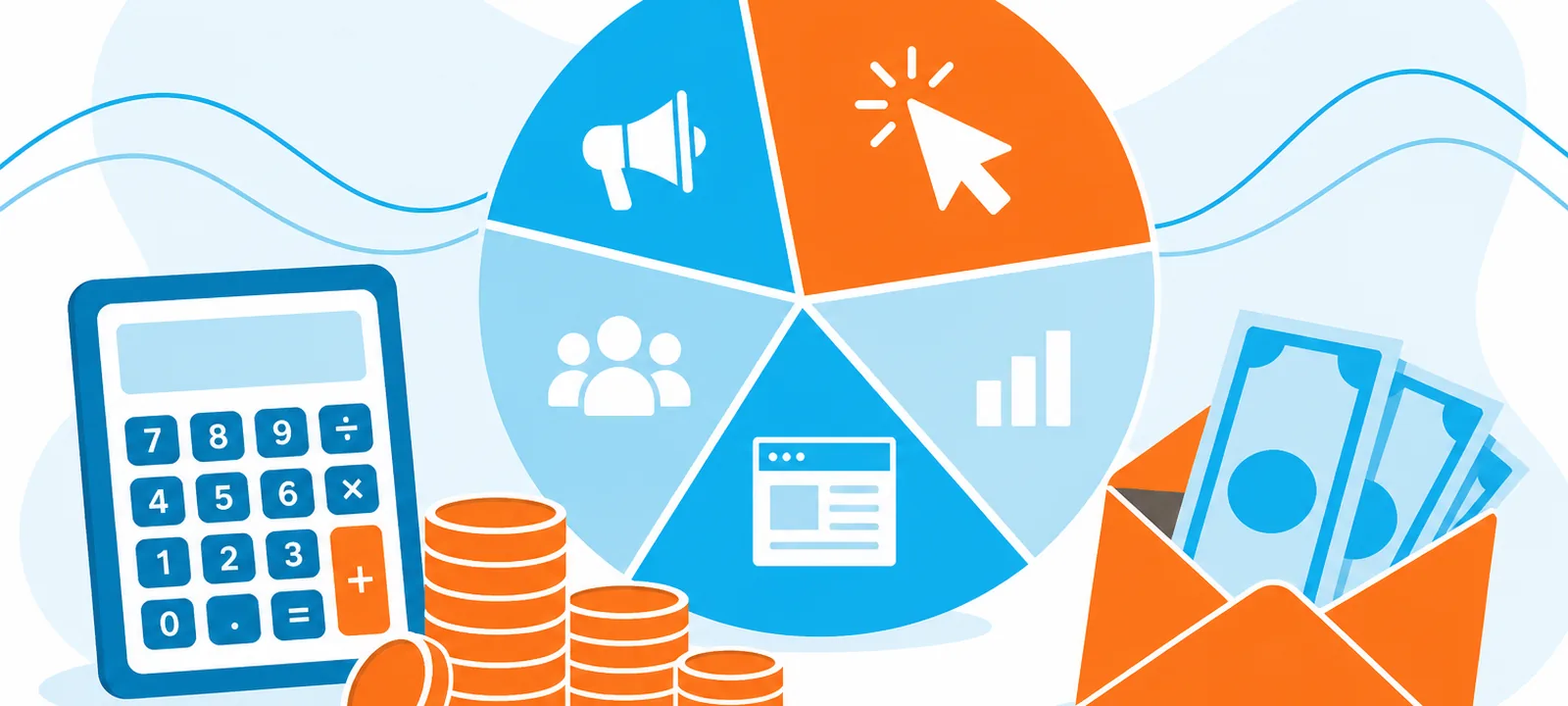
PPC pricing has three parts: what you pay per click, what you pay someone to manage it, and what you pay for tools. Most businesses running search ads seriously spend between $9,000 and $10,000 a month in total, but a local service business can run a working campaign on $500. The variable that decides which end you sit at is your industry, not your ambition.
Cost per click is the number everyone quotes and the least useful one on its own. A $50 legal click that produces a client worth $8,000 is cheap. A $0.60 ecommerce click that never converts is not.
What does PPC cost per click?
| Platform | Typical CPC | Best for |
| Google Search | $1 to $5, over $50 in legal and insurance | People actively looking to buy |
| Google Display | $0.50 to $1.50 | Remarketing and reach |
| Microsoft Advertising | 20 to 30% below Google | Same intent, smaller volume |
| Facebook and Instagram | $0.50 to $3 | Demand you have to create |
| $5 to $10 | B2B where job title decides the fit | |
| TikTok | Around $1, with a $50 daily minimum | Younger audiences, video-led offers |
The average CPC on Google Search sits between $2 and $4 across industries. Legal services run above $8, and single terms like "personal injury lawyer" pass $100 in competitive cities.
Why some industries pay ten times more
Price follows customer value, not advertising cleverness. Where one client is worth thousands, every advertiser in the auction can justify a high bid, and the clearing price rises until it stops making sense for the least patient bidder.
- $10 to $50 and up: legal, insurance, finance, real estate, private healthcare.
- $2 to $6: B2B software, home improvement, professional services, technology.
- $0.50 to $3: ecommerce, entertainment, education, hospitality.
Three other factors move the number within your industry. Location, because a click in London or New York costs more than the same click in a smaller market. Time, because peak hours carry more competition. Device, because mobile clicks are usually cheaper and convert less often.
What sits behind the pricing in the most expensive categories, and why it stays that way, is covered in high CPC niches.
What else you pay for besides clicks
| Cost | Typical range | Notes |
| Agency retainer | $500 to $5,000 a month | Flat fee, common below $20,000 ad spend |
| Percentage of spend | 10% to 30% | Standard above roughly $20,000 a month |
| Performance pricing | Per lead or per sale | Check how a lead is defined before signing |
| Landing page build | $500 to $2,500 per page | Usually the highest-return spend on this list |
| Click fraud protection | $50 to $300 a month | Pays for itself above a few thousand in spend |
| Research and automation tools | $99 to $299 a month | Semrush, Ahrefs, SpyFu and similar |
Percentage-of-spend pricing has an obvious tension worth naming: your agency earns more when you spend more, regardless of what the spending returns. It works when the contract also carries a cost per acquisition target.
What should you budget to start?
| Business size | Monthly ad spend |
| Local service business | $500 to $2,000 |
| Small business, competitive market | $1,000 to $5,000 |
| Mid-sized company | $10,000 to $50,000 |
| Enterprise | $100,000 and up |
The floor is set by arithmetic rather than ambition. Your budget has to buy enough clicks to learn from. At $8 a click, a $300 monthly budget buys 37 clicks, and at a 3% conversion rate that is one enquiry. Nothing can be concluded from that, in either direction.
Work backwards instead. Decide what a customer is worth, estimate the conversion rate at 2 to 5%, multiply by your industry CPC, and you have the cost per customer you need to beat. If the number does not work at your average order value, the answer is a different channel rather than a bigger budget.
Working out your first month's budget
Four numbers give you a defensible figure, and you can get all of them in an afternoon.
1. What a customer is worth. Average order value, or average first-year revenue for a service business. Use gross margin rather than revenue if margins are thin.
2. What you can afford to pay for one. A common starting point is 20 to 30% of gross margin on the first sale, higher if customers repeat.
3. Your expected conversion rate. Assume 2% until you have your own data. Optimism here is the most common budgeting error.
4. Your industry CPC. From the table above, or from Keyword Planner for your specific terms.
A worked example. A B2B service with a customer worth $2,000 in gross margin can pay $500 to acquire one. At a 2% conversion rate that is 50 clicks per customer, and at $4 a click, $200 in media per customer. Comfortable. At $12 a click it is $600 per customer, which loses money until the conversion rate improves.
Then set the monthly budget high enough to produce at least 15 to 30 conversions, since that is roughly what automated bidding needs before it works properly. If your arithmetic says that costs more than you have, start on fewer keywords rather than on a thinner budget across all of them.
What drives your cost per click up or down
Quality Score. Google scores each keyword 1 to 10 on expected click-through rate, ad relevance and landing page experience. Better scores win the same position at a lower bid, which is the only lever that lowers cost without lowering volume.
Match type. Broad match with a thin negative keyword list is the most reliable way to overspend in Google Ads. Phrase and exact cost more per click and far less per conversion.
Keyword choice. Long-tail terms have fewer bidders and clearer intent. "Best budget gaming laptop under 800" costs a fraction of "laptop" and converts several times better.
Bidding strategy. Automated bidding needs roughly 30 conversions a month to work. Below that it optimises on noise and costs more than manual bidding would.
Competitors. When a new advertiser enters your auction, your CPC rises without you changing anything. Auction Insights is where you see it happen. In expensive categories, high CPC niches also attract more fake clicks, which pushes the number up further.
How to spend less without losing volume
- Read the search terms report weekly and add negatives. In most accounts the top ten spenders include several queries nobody would have chosen deliberately.
- Split ad groups so each one covers a single intent, then write the ad for that intent.
- Give each ad group its own landing page. Homepage traffic is where budget goes to die.
- Cut bids on hours and locations that produce clicks and no conversions.
- Run Microsoft Advertising alongside Google. Same searches, materially lower cost, and the setup imports directly.
The cost nobody budgets for
Every line above assumes the clicks you buy come from people. A share of them does not.
Bots, click farms and competitors clicking to drain a budget all bill at your normal cost per click. They never convert, so they raise your real cost per customer by exactly their share of your traffic, and no Quality Score work touches them.
The effect scales with price. At $0.60 a click, ten wasted clicks a day is $180 a month. In an $8 market it is $2,400, and in legal it can pass $15,000. This is why the most expensive niches are also the ones where invalid traffic does the most damage, and across the 1,793+ businesses running ClickPatrol the invalid share is consistently highest in exactly those categories.
Three checks cost nothing. Compare Google Ads clicks against GA4 sessions and see whether the gap is wider than the normal 10 to 20%. Look at bounce rate on your most expensive keyword. Check whether the same networks appear repeatedly with no engagement. If your traffic fails those tests, your effective PPC pricing is higher than any of the tables above suggest.
Frequently Asked Questions
How much does PPC advertising cost per month?
What is a good cost per click?
It depends entirely on the industry. Ecommerce averages around $1.16 and legal around $6.75. A good CPC is one your margin can carry at your conversion rate, which is why cost per conversion is the more useful number.
How much do PPC agencies charge?
Common models are a percentage of ad spend, usually 10% to 20%, a flat monthly retainer, or a performance fee. Below a few thousand a month in spend, the percentage model rarely covers enough hours to be worth it for either side.
Why is my PPC cost rising without more conversions?
Usually auction density, broad match expansion or a falling Quality Score. Invalid clicks are the fourth cause and the least often checked: they raise the cost per useful click while the reported CPC stays flat.

Written & reviewed by
Abisola Tanzako
Content Manager, ClickPatrol (click fraud & invalid-traffic specialist)
Abisola covers bot traffic, ad fraud and PPC protection, drawing on ClickPatrol platform data from 1,793+ businesses.
Last updated: 6 October 2026