English
 Nederlands
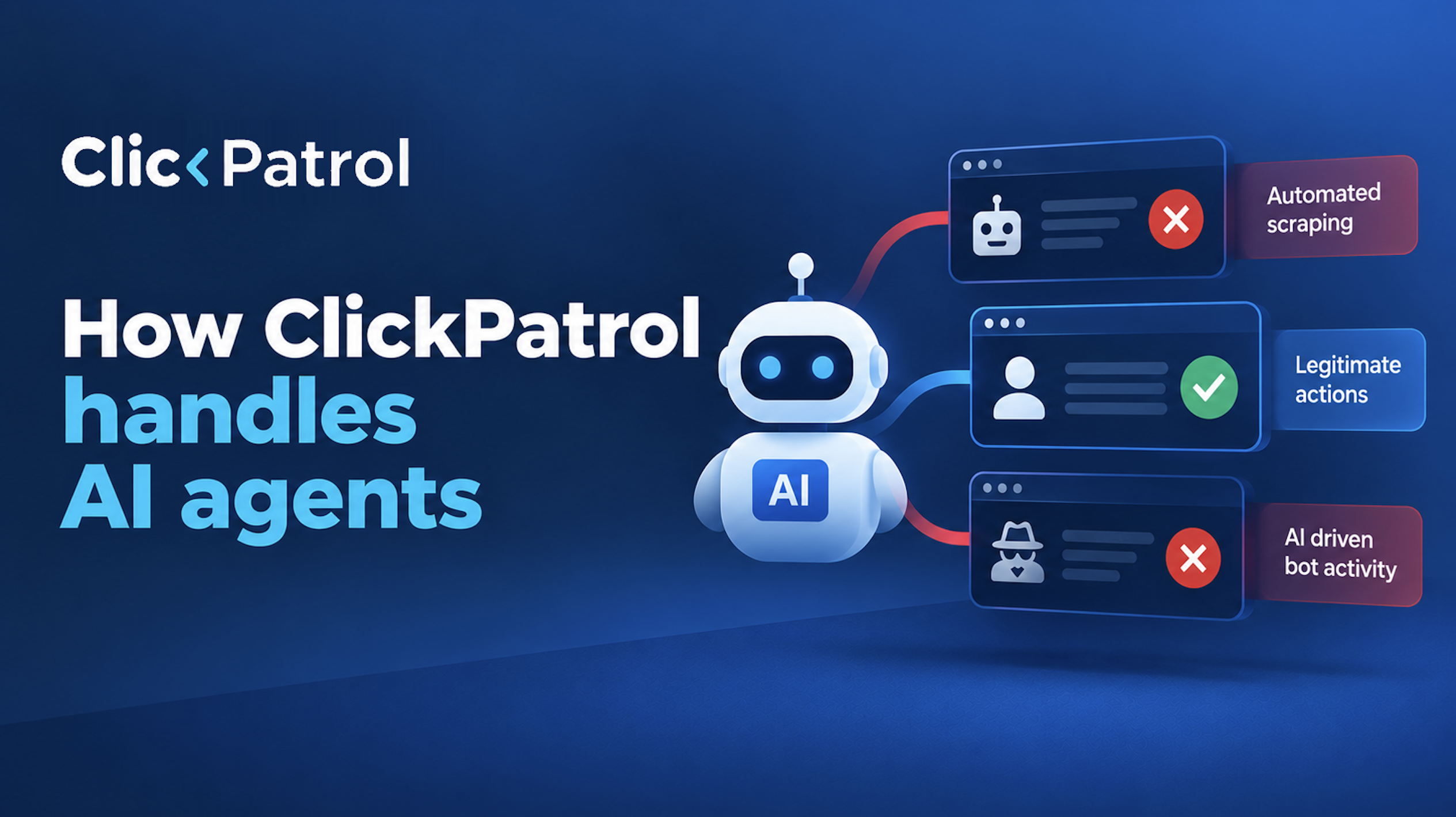
Not all AI traffic is bad traffic. And blocking every automated interaction with your website might mean blocking potential customers.
For advertisers, this creates an important challenge: how do you protect your advertising budget from unwanted automation without blocking interactions that might generate sales or leads?
This article explains the difference between AI agents and traditional bots, what it means for advertisers, and how ClickPatrol handles automated traffic.
What is the difference between AI agents and traditional bots?
Traditional bots and AI agents both use automation to interact with websites. The difference lies in the purpose of their activities.
Traditional bots often perform repetitive tasks, such as scraping website content, collecting pricing information, or generating automated requests.
AI agents, on the other hand, might perform tasks on behalf of real users.
For example, an AI agent might:
- Compare products across multiple websites before making a purchase.
- Add products to a shopping cart and complete checkout.
- Fill out a lead generation form.
- Book an appointment or make a reservation.
- Research service providers and submit enquiries.
Consider an ecommerce business selling electronic products.
An automated scraper might visit hundreds of product pages to collect pricing information without any intention of purchasing.
An AI shopping agent might visit the same website, compare available products, and complete a purchase based on a customer's instructions.
Both interactions originate from automated systems, but their potential value to the business is different.
Does AI traffic automatically count as click fraud?
AI traffic refers to interactions performed by artificial intelligence systems, while click fraud involves invalid or fraudulent interactions with online advertisements.
An AI agent visiting your website does not automatically indicate fraudulent activity.
For example, an AI assistant researching products on behalf of a customer might visit your website to collect information before making a recommendation.
This interaction involves automation, but it does not necessarily involve fraudulent clicks.
However, automated systems might also generate repeated ad clicks, manipulate advertising activity, or create traffic without genuine commercial intent.
Such activity might qualify as invalid traffic and waste advertising budgets.
For advertisers, the distinction is between identifying automated visitors and determining whether their activities are legitimate.
Why legitimate AI agents might resemble suspicious bots
AI agents sometimes perform actions that resemble traditional bot behaviour.
For example, an AI agent researching products for a customer might:
- Visit several product pages within seconds.
- Compare multiple pricing options during a single session.
- Submit a form shortly after arriving on a website.
- Perform repeated actions while completing a customer's request.
Traditional bot detection systems often consider repetitive actions, unusual browsing speeds, and automated interactions when identifying suspicious traffic.
As a result, certain activities performed by legitimate AI agents might resemble unwanted automation.
Consider an AI agent comparing insurance providers on behalf of a customer.
The agent might visit several websites, review pricing information, and submit quotation requests within a short period.
Although these actions might appear suspicious when viewed individually, they might form part of a legitimate customer request.
This creates a challenge for traffic protection systems. They need to distinguish between suspicious automated behaviour and legitimate tasks performed through automation.
Why blocking all AI traffic creates problems for advertisers
Businesses invest in advertising to attract potential customers and generate revenue.
Blocking all automated traffic without considering its purpose creates three potential problems.
1. Lost sales opportunities
Customers now increasingly use AI tools to research products, compare prices, and complete tasks.
If an AI agent visits your website on behalf of a customer who intends to purchase, automatically blocking the interaction might prevent the transaction.
2. Missed leads and enquiries
Not every automated form submission is spam.
An AI agent might submit a contact form, request a quote, or schedule a consultation on behalf of a potential customer.
Automatically treating these submissions as fraudulent risks excluding genuine enquiries from your sales pipeline.
3. Inaccurate traffic classification
Traffic protection uses signals such as repetitive clicks, unusual traffic patterns, and automated behaviour to identify suspicious activity.
However, an AI agent completing a legitimate transaction and a bot generating unwanted activity should not automatically receive the same treatment.
Advertisers need to distinguish between automation that wastes their budget and interactions that represent genuine business opportunities.
How ClickPatrol handles AI agents
ClickPatrol uses its traffic analysis algorithm to evaluate interactions and determine how they should be handled.
Our approach focuses on the behaviour and intent associated with the traffic, rather than automatically classifying every AI interaction as unwanted.
Identifying and blocking unwanted automation
Some automated systems interact with websites without meaningful customer intent.
Examples include scraping bots that repeatedly collect website content and automated systems generating suspicious activity.
When ClickPatrol identifies unwanted automated traffic, such as scraping activity, our system automatically blocks it.
This helps protect advertising campaigns from activity that provides no meaningful commercial value.
Evaluating AI agents performing legitimate tasks
AI agents performing legitimate actions are not automatically excluded.
For example, an agent submitting a genuine enquiry on behalf of a customer represents a different type of interaction from a bot generating spam submissions.
Our algorithm evaluates the behaviour and intent behind these interactions to determine the appropriate action.
What does this mean for ecommerce and lead generation businesses?
The implications depend on how your business generates revenue.
Ecommerce businesses
Ecommerce businesses need traffic that has a realistic chance of generating purchases.
Unwanted automation might create website activity without contributing to sales. Meanwhile, AI shopping agents might research products, compare options, and complete transactions on behalf of customers.
Treating both types of traffic as equally suspicious risks excluding potential purchases.
For ecommerce advertisers, the priority is to protect advertising budgets from unwanted activity while preserving legitimate buying opportunities.
Lead generation businesses
Lead generation businesses depend on genuine enquiries from prospects who have a realistic chance of becoming customers.
Automated spam submissions waste resources and might distort campaign performance data.
But an AI agent submitting an enquiry on behalf of a real customer represents a different situation.
For example, someone looking for an insurance provider might instruct an AI assistant to compare available options and request quotations.
If the agent submits a legitimate enquiry, automatically blocking it might prevent the business from reaching a potential customer.
Protect your advertising budget without blocking potential customers
As AI agents become more involved in online shopping, research, and business enquiries, advertisers need to reconsider how they evaluate automated traffic.
The question is no longer whether a visitor is human or AI. It is whether the interaction brings genuine value to your business.
At ClickPatrol, we focus on identifying unwanted automated activity while preserving legitimate interactions with potential customers.
Our goal is to protect your advertising budget without blocking opportunities that might generate real revenue.