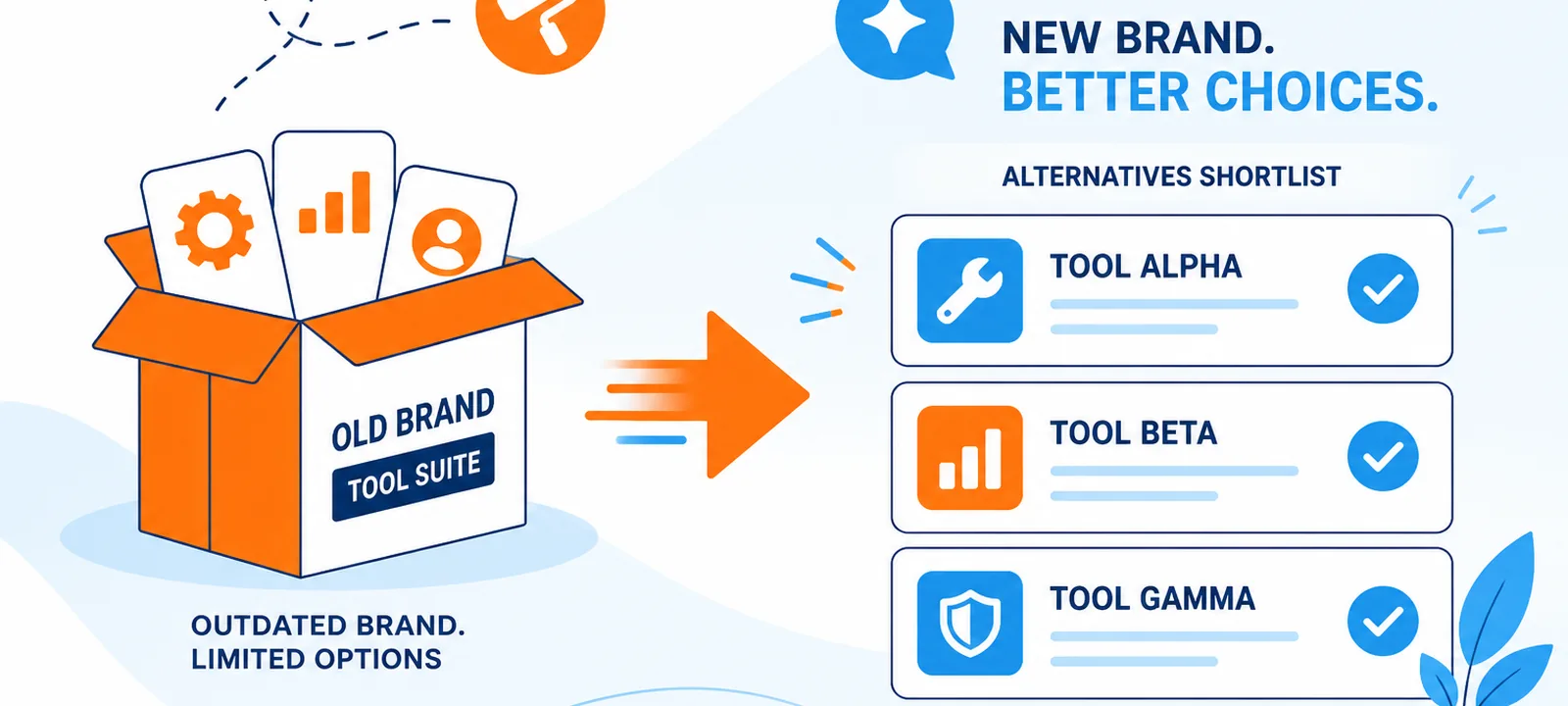
ClickPatrol is the most direct upgrade: a comparable entry price (€59/month vs. $79), unlimited domains instead of one website, native Microsoft Ads coverage instead of manual CSV exports, and protection that keeps running when you hit the click allowance. ClickCease is the best-known name with the largest review volume, and Lunio covers the most ad channels if a quote-based enterprise tool fits your budget.
-
Solutions
-
 Click Fraud Protection
Block invalid clicks across every ad channel.
-
 Smart Bidding Protection
Feed Google clean, human-only signals.
-
 Clean Remarketing Audiences
Exclude suspicious traffic from your lists.
-
 All Features
Every ClickPatrol feature in one place.
-
 E-commerce & Retail
Protect shopping campaigns and product feeds.
-
 Service Providers
Stop wasted spend on local & lead-gen ads.
-
 Marketing Agencies
Classify, protect and train every client account.
-
 All Industries
Browse click fraud protection by industry.
-
 Small Business
Affordable protection that pays for itself.
-
 Enterprises
Scale protection across brands & accounts.
-
 Regional Companies
Keep local budgets on real, nearby buyers.
-
 Multinationals
Consistent protection across every market.
-
-
Agencies
-
For Agencies
Classify, protect and train every client account.
-
 Partner Program
Earn 15 to 25% recurring commission on linked clients.
-
 Case Studies
21 UK agencies unlocked over 6% media savings.
-
-
Resources
-
What is Click Fraud?
Learn what fake PPC clicks are and why they matter.
-
 Bot Traffic
Detect and block non-human clicks.
-
 Competitor Fraud
Stop rivals draining your budget.
-
 Sophisticated Fraud
Catch SIVT that native filters miss.
-
 Click Farms
Stop coordinated low-quality click operations.
-
 Invalid Traffic
Block every click that never converts.
-
 Help docs
How to connect Google Ads, GTM and other ad channels.
-
 FAQ
FAQ
Answers to the most common questions.
-
 Blog
Blog
Articles and guides from our expert team.
-
 Comparisons
ClickPatrol vs ClickCease and other tools.
-
 Tools
Tools
Free tools by ClickPatrol & Friends.
-
 About ClickPatrol™
Who we are and our mission.
-
Case Studies
Why agencies and businesses use ClickPatrol.
-
 Customer Reviews
Reviews and success stories from customers.
-
Partner Program
Join our affiliate & partner program.
-
 Contact us
Talk to our team about your ad traffic.
-
- Pricing
Fraud Blocker Review 2026: Pricing, Features, and the 7 Best Alternatives

Last updated: August 2026
TL;DR: What are the best Fraud Blocker alternatives?
The best Fraud Blocker alternatives in 2026 are ClickPatrol (800+ data points per click, native Microsoft Ads and DV360 coverage, from €59/month), ClickCease (the largest install base in the category, from $99/month billed annually), and Lunio (the widest named channel list, priced on quote). ClickGuard suits teams that want granular manual control, TrafficGuard has the cheapest entry price if Google Search is all you run, fraud0 leads with ad-refund recovery rather than prevention, and Spider AF fits high click volumes. Which one is right depends on the platforms you advertise on and how much traffic your plan needs to absorb.
What is Fraud Blocker? (Short review)
Fraud Blocker is a click fraud protection tool focused on Google Ads and Meta, sold at published prices with no sales call in between. It is a verified Google partner and blocks fraudulent IPs in real time through an OAuth connection to your Google Ads account. Detection covers fraud traffic scoring, device fingerprinting, VPN and proxy blocking, customisable rules, API access and exportable IP lists. The vendor states it protects 4,500 client accounts with 20,000 domains on the platform and analyses 60 million IPs per month.
Fraud Blocker pricing (from the vendor's pricing page, August 2026):
| Plan | Monthly | Annual (per month) | Includes |
|---|---|---|---|
| Standard | $79/mo | $63/mo | 5,000 ad clicks, 1 website, 3 team members, 90-day data retention |
| Pro | $99/mo | $84/mo | 25,000 ad clicks, 50 websites, 10 team members, 250 email verifications |
| Enterprise | From $489/mo | From $389/mo | 250,000+ ad clicks, unlimited websites and members, 12-month retention, 2,500 email verifications |
Annual billing saves 20%. All plans are month-to-month with one-click cancellation and a 7-day free trial. White-label is listed on every tier, which is unusual: most competitors reserve it for agency plans.
Where does Fraud Blocker excel?
- Transparent pricing. Every plan, click allowance and limit is published on the website. No sales-gated quotes, no hidden tiers. In a market where several vendors publish no price at all, this matters.
- Generous website counts on Pro. The $99/month Pro plan covers 50 websites. For a small agency that needs basic Google Ads protection across many client domains, that is one of the cheapest routes in the market.
- White-label on all three tiers. Agencies can present reports under their own brand without paying for an enterprise plan.
- No overage bills. Exceeding the click allowance is never billed as a surprise charge. The flip side is covered below, because it is a real trade-off rather than a free lunch.
- Month-to-month with one-click cancellation. No annual commitment is required to get the published price, unlike ClickCease, where list prices assume annual billing.
Where does Fraud Blocker fall short?
- Protection stops when the click allowance runs out. Fraud Blocker does not bill overage. Instead, protection pauses until you upgrade or the next billing cycle starts. If a bot wave burns through your 5,000-click allowance mid-month, your ads run unprotected for the rest of it. This is stated on the vendor's own pricing page and is the single most important operational risk to understand before buying.
- No native Microsoft Ads protection. The vendor's own FAQ says bad IPs can be exported to CSV and imported into Bing Ads, AdRoll and Yahoo Ads manually. That is a workaround, not an integration: nobody re-imports CSV files daily.
- Standard covers one website. The $79 entry plan protects a single site with three team members. Multi-site advertisers start at Pro.
- No verifiable third-party review score. As of August 2026, Fraud Blocker has no rated product page on G2 or Capterra and no Trustpilot profile with a score. The pricing page shows G2 badges without scores. That does not make it a bad product, but it means you cannot check independent user sentiment the way you can for ClickPatrol, ClickCease or ClickGuard.
- Customer figures are vendor claims. The 4,500 accounts and 60 million IPs analysed per month come from Fraud Blocker's own site and are not independently audited.
Why do people look for a Fraud Blocker alternative?
Fraud Blocker sells simplicity: published prices, quick setup, Google and Meta covered. Advertisers usually start shopping for an alternative for one of three reasons. First, the click-allowance model: protection that switches off mid-month is the opposite of what you buy a fraud tool for, and accounts under active attack hit their allowance fastest. Second, platform coverage: there is no native Microsoft Ads integration, so Bing spend depends on manual CSV exports. Third, depth: Fraud Blocker handles the fundamentals, but advertisers dealing with sophisticated fraud, polluted remarketing audiences or fake form fills need protection layers it does not offer.
The seven alternatives below are compared on the criteria that actually differ: what happens at the click limit, which platforms block automatically, and how deep the detection goes.
The 7 best Fraud Blocker alternatives compared
ClickPatrol: Best overall upgrade for detection depth and platform coverage
Best for: Advertisers on Google Ads, Meta or Microsoft Ads who want deeper per-click analysis and protection that does not switch off mid-month.
ClickPatrol is a Netherlands-built click fraud protection platform that analyses 800+ data points per click with 99.97% bot detection accuracy. Where Fraud Blocker focuses on click blocking, ClickPatrol covers four layers: AdProtector (real-time click blocking), AudienceProtector (keeps bots out of remarketing and lookalike lists), DataProtector (keeps conversion signals clean for Smart Bidding) and FormProtector (blocks spam and fake form fills before they reach your CRM as junk leads).
That multi-account path is what the agencies page covers when white-label and many client domains are why you are shopping.
Key differences vs. Fraud Blocker:
- 800+ data points analysed per click
- Native Microsoft Ads (Bing) coverage, no CSV exports
- Unlimited domains and unlimited platforms on every plan, including the €59 Starter
- At the click allowance, ads keep running: ClickPatrol sends a soft warning, then stops adding new exclusions until you upgrade. Existing exclusions stay active and campaigns are never left bare
- Four protection modules instead of click blocking alone
- Setup in under a minute: connect Google Ads with one click, no code or plugins
Supported platforms: Google Ads (including Performance Max), Meta, Microsoft Ads (Bing), DV360 and all social platforms
Pricing: Traffic Insights (7-day free trial, monitoring only); Traffic Security Starter €59/month billed annually for 5,000 protected clicks; Traffic Security PRO from €69/month with volume pricing up to 75,000 clicks; Agency and multi-brand plans on quote from 100,000 clicks with unlimited brands. No setup costs, no lock-in. See the pricing page for the volume slider.
Pros:
- Deepest per-click analysis at this price point (800+ data points)
- Unlimited domains on every plan, where Fraud Blocker's Standard covers one website
- GDPR and CCPA compliant, built in the Netherlands, Google-certified click tracker
- Protection degrades gracefully at the click limit instead of stopping
- Audience, data and form protection included, not sold separately
Cons:
- Smaller brand presence than ClickCease
- No white-label reporting on the Starter plan (agency features sit in the Agency plan)
- Free tier (Traffic Insights) monitors but does not block; active exclusions require a paid plan
Ratings: G2: 4.9/5 (69 reviews) | Capterra: 5.0/5 (18 reviews) | SourceForge: 5.0/5 (51 reviews)
Verdict: ClickPatrol is the most direct upgrade from Fraud Blocker: comparable entry price (€59 vs. $79), unlimited domains instead of one, native Bing coverage instead of CSV exports, and protection that never leaves campaigns bare mid-month. The trade-off is that agency white-label sits on the quote-based Agency plan rather than on every tier.
ClickCease (CHEQ Essentials): Best-known name with the largest install base
Best for: Advertisers who want the category's most established SMB product, backed by CHEQ's enterprise detection technology.
ClickCease is the SMB tier of CHEQ and the biggest name in click fraud protection, with over 2,000,000 campaigns protected according to the vendor. ClickCease says it runs 2,000+ behavioral tests per click in real time. It blocks fraudulent IPs automatically on Google Ads (unlimited Google Ads accounts on all plans) and excludes fraudulent audiences on Meta.
Key features:
- Automatic IP blocking on Google Ads, audience exclusion on Meta, Microsoft Ads supported
- Lead Shield validates HubSpot form submissions (250 leads/month on Starter)
- Bot protection for WordPress, Pixel Guard Connector, Consent Mode compatibility
- Agency permissions and white-label reporting from the Pro plan
Supported platforms: Google Ads, Meta (audience exclusion), Microsoft Ads
Pricing: Starter $99/month billed annually (1 website, 5,000 traffic, 250 HubSpot leads); Pro $149/month (5 websites, 10,000 traffic, white-label reporting); Advanced $349/month (20 websites, 50,000 traffic, in-person onboarding); Enterprise via CHEQ for 1M+ annual visits. A $69/month promo applies to the first three billing cycles only; the regular price bills from month four. 7-day free trial, cancel any time.
Pros:
- Largest install base and brand recognition in the SMB market
- Unlimited Google Ads accounts on every plan
- Overage is billed at actual usage instead of cutting protection, the opposite of Fraud Blocker's model
- HubSpot lead validation built in
Cons:
- The traffic allowance counts any activity CHEQ detects, including internal page views, not just ad clicks. A busy site burns through 5,000 "traffic" much faster than 5,000 ad clicks
- List prices assume annual billing; the promo price ends after three cycles
- White-label starts at Pro ($149), where Fraud Blocker includes it on every tier
Ratings: Trustpilot: 4.3/5 (522 reviews) | G2: 4.6/5 (113 reviews) | Capterra: 4.7/5 (223 reviews, listed as CHEQ Essentials)
Verdict: ClickCease is the safe, established choice with the most review volume in the category. Watch two things: the traffic definition (all site activity counts against your allowance) and the promo-versus-regular price. For a full breakdown, see our ClickCease review and alternatives.
Lunio: Best for multi-channel advertisers on larger budgets
Best for: Mid-market and enterprise teams running paid media across search, social and display who want one platform over all of it.
Lunio (formerly PPC Protect) is a UK-based invalid traffic platform with the widest named channel list in this comparison: Google, Meta, Microsoft Ads (Bing), X, LinkedIn, Reddit, TikTok, Yandex and Naver, plus more. Its machine learning engine scores every click as legitimate, suspicious or invalid, and an invalid IP found on one channel is automatically excluded across the others. On Google Ads it blocks through IP exclusion lists; on Meta, where IP blocking is unavailable, it builds and updates custom audiences of invalid users. Both run automatically once connected.
Key features:
- Cross-platform exclusion propagation: one detection protects every connected channel
- Two years of click-level data retention, the longest in this set
- Multiple workspaces with multi-account management for agencies and multi-brand teams
- Cookieless detection, GDPR and CCPA compliant
Supported platforms: Google Ads, Meta, Microsoft Ads (Bing), X, LinkedIn, Reddit, TikTok, Yandex, Naver and more
Pricing: Not published. Lunio is priced as a share of your ad spend and quoted per account. The 14-day free offer is a traffic audit with access to the analytics, not a working trial: there is no indication blocking runs during the audit.
Pros:
- Widest named channel coverage in this comparison
- Automatic blocking on every supported channel, using the right method per platform
- Longest data retention (2 years)
Cons:
- No published pricing at all: you cannot compare cost without a sales conversation, the exact opposite of Fraud Blocker's transparency
- Cost scales with ad spend, so the price rises with your budget even if invalid traffic does not
- The 14-day offer is an audit, not a self-serve trial
Ratings: G2: 4.6/5 (146 reviews) | Capterra: 4.4/5 (15 reviews, still listed under the old PPC Protect name)
Verdict: Lunio is the strongest option if your frustration with Fraud Blocker is channel coverage and you have the budget for a quote-based enterprise tool. If transparent pricing is why you chose Fraud Blocker in the first place, Lunio will feel like a step backwards on that axis. Full comparison: Lunio review and alternatives.
fraud0: Best for recovering money already lost to invalid clicks
Best for: Google Ads advertisers who care more about getting refunds for past invalid traffic than about blocking the next click.
fraud0 is a German invalid-traffic platform that has repositioned around ad-refund recovery. Its homepage now leads with what it calls the world's first AI Agent for ad refunds, promising recovery of up to 10% of ad spend through what the vendor describes as a 100% Google-compliant refund process. Prevention (IP exclusions, negative audiences, automatic exclusion of low-quality Performance Max placements) is the second layer. Setup is a JavaScript tag plus a Google Ads connection.
Key features:
- Automated Google Ads refund reports on every plan
- IP blocking and negative audiences for Google, Meta and Microsoft Ads from the Starter plan
- Google Analytics connector on every plan
- Programmatic in-ad protection, affiliate conversion checks and form-fill protection on Enterprise only
Supported platforms: Google Ads, Meta, Microsoft Ads; programmatic and affiliate protection Enterprise only
Pricing: Starter €50/month (€40 annual) for up to 50,000 monthly sessions; Pro €150/month (€120 annual) for up to 100,000 sessions; Enterprise from €600/month. Two things to check before comparing with Fraud Blocker: the allowance counts site sessions rather than ad clicks, so organic and direct traffic consume the plan, and refund recovery carries a 33.33% success fee on recovered spend on top of the subscription.
Pros:
- Refund recovery is a genuinely different angle: money back instead of clicks blocked
- Microsoft Ads included from the Starter plan, where Fraud Blocker has no native support
- Lowest entry price in this set (€40/month annual)
Cons:
- The 33.33% success fee means fraud0 keeps a third of every euro it recovers for you
- Session-based metering makes the headline price misleading for high-traffic sites
- Form-fill protection is Enterprise only (from €600/month); ClickPatrol includes it from Starter
- No meaningful volume of public reviews yet on G2, Capterra or Trustpilot
Verdict: fraud0 makes sense as a recovery layer if you suspect Google owes you refunds for past invalid traffic. As a prevention tool it is harder to compare: sessions are not clicks, and the success fee changes the real cost. Full breakdown: fraud0 review and alternatives.
ClickGuard: Best for granular manual control
Best for: Hands-on PPC managers who want to set their own thresholds, rules and exclusions rather than trust a black box.
ClickGuard is priced on monthly ad spend rather than clicks, with unlimited clicks on every tier. The vendor organises the product into four pillars: Traffic Enhancement, Threat Analytics, Click Forensics, and Tracking and Validation. It tracks paid and organic clicks, visitor behaviour and conversions, and offers cross-account, geo, multi-targeting, VPN, IP-range, non-human, behaviour and conversion exclusions with automated and on-demand reports.
Key features:
- Unlimited clicks on every plan (pricing scales with ad spend instead)
- Campaign-level rule customisation and click forensics on every blocked click
- Threat and performance dashboards, automated reports
- Conversion tracking and placement exclusions from the Pro plan
Supported platforms: Google Ads, Meta and Microsoft Ads. On the Lite plan you pick one of the three; Standard and up cover all three together.
Pricing: Lite from $74/month (1 website, 1 PPC account, one platform, up to $5,000 monthly ad spend, 1-month data retention); Standard from $119/month (3 websites, up to $50,000 spend, 2-month retention); Pro from $159/month (unlimited websites, up to $100,000 spend, conversion tracking, 6-month retention); Custom above that. Monthly, quarterly (10% off) or yearly (20% off) billing, no long-term contract. A free trial is available; the vendor does not state its length.
Pros:
- Unlimited clicks removes the allowance anxiety entirely: the failure mode that matters most at Fraud Blocker does not exist here
- Deep manual control and per-click forensic data
- Microsoft Ads covered natively from Standard
Cons:
- Price scales with ad spend, so the "from" price understates cost for larger accounts
- Lite covers one platform and one PPC account only
- Short data retention on lower tiers (1 to 2 months)
Ratings: G2: 4.7/5 (30 reviews) | Capterra: 4.8/5 (155 reviews) | Trustpilot: 4.0/5 (182 reviews)
Verdict: ClickGuard trades Fraud Blocker's click allowance for an ad-spend cap, which is a better failure mode: protection never stops because of traffic volume. It rewards teams willing to configure rules and read forensics. Set-and-forget advertisers will get more out of ClickPatrol or Fraud Blocker itself.
TrafficGuard: Cheapest entry if Google Search is all you run
Best for: Single-domain advertisers on Google Search Ads only, and enterprises with mobile app or affiliate fraud problems.
TrafficGuard's $49/month Shield plan is the cheapest paid entry point in this comparison, but also the narrowest: it covers Google Search Ads on a single domain, up to $30,000 in monthly ad spend. Everything else (Meta, Performance Max, affiliate, mobile app protection with MMP integrations) sits in custom-priced enterprise plans. The $49 price is labelled a limited promo on the vendor's pricing page.
If the job is replacing the measurement partner rather than the click-fraud tool, that shortlist lives on AppsFlyer alternatives.
Key features:
- Detection mode lets you watch what would be blocked before activating blocking
- Custom click-frequency and validation rules, manual exclusions
- Enterprise products for Meta portfolios, affiliate fraud (cookie stuffing, forced clicks) and mobile app install fraud
Supported platforms: Google Search Ads on Shield; Meta, Performance Max, affiliate and mobile all require a custom enterprise plan
Pricing: Shield $49/month (Google Search only, one domain, up to $30,000 spend, unlimited users, cancel from account settings); Scale on quote (omnichannel, unlimited ad accounts, Smart Bid Optimiser, Performance Max Shield, dedicated success manager). 30-day free trial, card required, no charge during the trial. Note: the trial runs in detection mode only, so nothing is blocked until you activate protection.
Pros:
- Lowest entry price in this set ($49/month)
- Longest trial (30 days)
- Only tool here with dedicated mobile app and affiliate fraud products
Cons:
- Shield is Google Search only: no Meta, no Performance Max, one domain. Fraud Blocker's $79 plan covers more
- Every step beyond Shield is a sales conversation with custom pricing
- The 30-day trial blocks nothing by default
Ratings: G2: 4.5/5 (34 reviews) | Capterra: 4.7/5 (18 reviews)
Verdict: TrafficGuard undercuts Fraud Blocker on price but not on scope: $49 buys Google Search protection for one domain and nothing else. It is the right pick for enterprises with mobile or affiliate fraud, or single-channel advertisers on a tight budget. Full comparison: TrafficGuard review and alternatives.
Spider AF: Best for high click volumes and placement hygiene
Best for: Advertisers pushing hundreds of thousands of clicks per month who also want Performance Max and YouTube placement blocking.
Spider AF is a Japanese marketing security suite from Spider Labs, sold as separately priced products: Ad Fraud Protection, Fake Lead Protection, SiteScan website script security and affiliate bot protection. The ad fraud product starts at $150/month for up to 500,000 clicks, by far the largest allowance in this comparison, with unlimited domains and no spend-based fees on every tier.
Key features:
- Real-time blocking with IP and network rules, repeat-click frequency rules, location and audience exclusions on every plan
- Performance Max placement optimisation and YouTube placement blocking
- Made-for-advertising and brand safety category exclusions
- Dedicated Customer Success Manager on every plan, including help negotiating refunds
- EU and Japan data residency
Supported platforms: Google Ads (including Performance Max), Meta, Microsoft Ads and Yahoo on all plans
Pricing: Performance $150/month ($120 annual) for up to 500,000 clicks; Elite $990/month ($790 annual); Enterprise custom. The vendor's own pricing page states two different click ceilings for Elite (up to 1M in one table, up to 30M in another), so confirm the allowance in writing. Fake Lead Protection is a separate subscription from $288/month. The 14-day trial gives full Elite access but in monitoring mode only.
Pros:
- 500,000 clicks for $150 dwarfs Fraud Blocker's 25,000 for $99
- Unlimited domains and no ad-spend-based fees
- Strongest placement-level controls in this set
Cons:
- Data retention is 2 months on every plan, Enterprise included
- Entry price is the highest here for small accounts
- Trial runs in monitoring mode; registration is followed by a call from the support team rather than instant self-serve setup
- Fake lead protection costs extra, where ClickPatrol bundles FormProtector
Ratings: G2: 4.7/5 (12 reviews) | Capterra: 4.6/5 (16 reviews)
Verdict: Spider AF wins on raw click allowance and placement hygiene. Below roughly 25,000 clicks a month you are paying for capacity you will not use, and the 2-month data retention limits historical analysis. High-volume accounts outgrowing Fraud Blocker's Enterprise tier should shortlist it.
Feature comparison: Fraud Blocker alternatives at a glance
| Fraud Blocker | ClickPatrol | ClickCease | Lunio | fraud0 | ClickGuard | TrafficGuard | Spider AF | |
|---|---|---|---|---|---|---|---|---|
| Price from | $79/mo ($63 annual) | €59/mo (annual) | $99/mo (annual) | Quote only | €50/mo | $74/mo | $49/mo (promo) | $150/mo |
| Allowance basis | Ad clicks (5,000) | Protected clicks (5,000) | Site traffic (5,000, incl. internal views) | Share of ad spend | Site sessions (50,000) | Ad spend cap ($5k), unlimited clicks | Ad spend cap ($30k) | Clicks (500,000) |
| At the limit | Protection stops | No new exclusions; ads keep running protected | Overage billed at usage | n/a (spend-based) | Upgrade required | n/a (unlimited clicks) | Move to Scale quote | Upgrade required |
| Google Ads | Yes (real-time) | Yes (incl. PMax) | Yes | Yes | Yes | Yes | Search only on Shield | Yes (incl. PMax) |
| Meta Ads | Yes | Yes | Yes (audiences) | Yes (audiences) | Yes | Standard and up | Enterprise only | Yes |
| Microsoft Ads | Manual CSV export | Yes (native) | Yes | Yes (automatic) | Yes | Standard and up | No | Yes |
| Websites on entry plan | 1 | Unlimited | 1 | n/a | Sessions-based | 1 | 1 | Unlimited |
| Form/lead protection | Email verification (Pro+) | FormProtector included | Lead Shield (HubSpot) | No | Enterprise only | No | No | Separate product ($288/mo) |
| White-label | All tiers | Agency plan | Pro and up | Multi-workspace | No | No | No | No |
| Independent reviews | None verifiable | G2 4.9/5 (69) | Trustpilot 4.3/5 (522) | G2 4.6/5 (146) | None meaningful | Capterra 4.8/5 (155) | G2 4.5/5 (34) | G2 4.7/5 (12) |
Sources: each vendor's public pricing page, retrieved August 2026. Review scores are the highest-volume verifiable score per vendor; small samples are marked with their counts.
How do you choose the right Fraud Blocker alternative?
Start with what happens at the limit
The biggest practical difference between these tools is not detection marketing, it is the failure mode. Fraud Blocker stops protecting when the click allowance runs out. ClickCease bills overage. ClickGuard and TrafficGuard cap on ad spend instead of clicks. ClickPatrol keeps existing exclusions active and only pauses new ones. If your account has ever been hit by a bot wave, weigh this before anything else, because that is exactly when the allowance empties.
A plan that only watches clicks is a different product again. Clixtell alternatives is where that monitor-versus-block split is written out.
Then check your platforms
Google-only advertisers can shortlist almost anything here, including TrafficGuard's $49 plan. Running Meta as well rules out TrafficGuard Shield. Running Microsoft Ads rules out Fraud Blocker itself (manual CSV exports do not count as protection) and points to ClickPatrol, ClickCease, ClickGuard Standard or fraud0. Multi-channel teams on X, LinkedIn, Reddit or TikTok are in Lunio territory, with quote-based pricing to match.
Then count what your plan actually meters
5,000 ad clicks (Fraud Blocker, ClickPatrol) is not the same allowance as 5,000 site-traffic events including internal page views (ClickCease) or 50,000 sessions including organic (fraud0). A site with heavy organic traffic can exhaust a session-based or traffic-based plan without a single extra ad click. Compare allowances on your own analytics numbers, not on the headline figures.
Finally, decide how much beyond click blocking you need
If fake form fills, polluted remarketing lists or skewed Smart Bidding data are part of the problem, pick a tool that treats them as first-class features: ClickPatrol bundles all three, ClickCease validates HubSpot leads, Spider AF sells fake-lead protection separately. If you purely need clicks blocked at the lowest defensible price, Fraud Blocker itself remains a fair choice, allowance risk and all.
Conclusion: which Fraud Blocker alternative is right for you?
- Best overall upgrade: ClickPatrol. Comparable price, unlimited domains, native Microsoft Ads, four protection layers, and no mid-month protection gap.
- Best-known name: ClickCease, with the category's largest install base and review volume. Mind the traffic definition and annual billing.
- Best for many channels: Lunio, if a quote-based enterprise tool fits your budget.
- Best for refunds: fraud0, if recovering past ad spend matters more than blocking, and the 33.33% success fee is acceptable.
- Best for control: ClickGuard, for hands-on managers who want rules and forensics with unlimited clicks.
- Best budget single-channel pick: TrafficGuard Shield at $49, Google Search only.
- Best for volume: Spider AF, with 500,000 clicks for $150 and the strongest placement controls.
The fastest way to decide is to run your own traffic through a trial and compare what each tool flags. Start a 7-day ClickPatrol trial to see how many of your clicks are invalid, or check the feature overview first.
Frequently Asked Questions
What is the best Fraud Blocker alternative?
How much does Fraud Blocker cost?
Fraud Blocker's Standard plan is $79/month ($63/month billed annually) for 5,000 ad clicks and one website. Pro is $99/month ($84 annual) for 25,000 clicks and 50 websites, and Enterprise starts at $489/month for 250,000+ clicks. All plans are month-to-month with a 7-day free trial, and white-label reporting is included on every tier.
Does Fraud Blocker support Microsoft Ads?
Not natively. Fraud Blocker's own FAQ says bad IPs can be exported to CSV and imported into Bing Ads, AdRoll and Yahoo Ads manually. If Microsoft Ads is part of your spend, look at alternatives with native coverage: ClickPatrol, ClickCease, fraud0, or ClickGuard from its Standard plan.
What happens when you reach Fraud Blocker's click limit?
Protection stops until you upgrade or the next billing cycle starts. Fraud Blocker never bills overage, but that means your ads run unprotected for the rest of the month once the allowance is used up. This matters most during bot attacks, which is exactly when the allowance empties fastest. By comparison, ClickCease bills overage at usage and ClickPatrol keeps existing exclusions active while pausing only new ones.
Is Fraud Blocker good for agencies?
Partly. The $99/month Pro plan covers 50 websites and white-label reporting is included on every tier, which is cheap for multi-client Google Ads protection. The trade-offs are no native Microsoft Ads integration, protection that stops at the click allowance, and no verifiable third-party review score on G2, Capterra or Trustpilot as of August 2026.

Written & reviewed by
Abisola Tanzako
Content Manager, ClickPatrol (click fraud & invalid-traffic specialist)
Abisola covers bot traffic, ad fraud and PPC protection, drawing on ClickPatrol platform data from 1,793+ businesses.
Last updated: 6 October 2026