-
Solutions
-
 Click Fraud Protection
Block invalid clicks across every ad channel.
-
 Smart Bidding Protection
Feed Google clean, human-only signals.
-
 Clean Remarketing Audiences
Exclude suspicious traffic from your lists.
-
 All Features
Every ClickPatrol feature in one place.
-
 E-commerce & Retail
Protect shopping campaigns and product feeds.
-
 Service Providers
Stop wasted spend on local & lead-gen ads.
-
 Mobile App Providers
Protect app install and in-app ad campaigns.
-
 Marketing Agencies
Show clients real, reportable media savings.
-
 All Industries
Browse click fraud protection by industry.
-
 Small Business
Affordable protection that pays for itself.
-
 Enterprises
Scale protection across brands & accounts.
-
 Regional Companies
Keep local budgets on real, nearby buyers.
-
 Multinationals
Consistent protection across every market.
-
-
Resources
-
What is Click Fraud?
Learn what fake PPC clicks are and why they matter.
-
 Bot Traffic
Detect and block non-human clicks.
-
 Competitor Fraud
Stop rivals draining your budget.
-
 Sophisticated Fraud
Catch SIVT that native filters miss.
-
 Click Farms
Stop coordinated low-quality click operations.
-
 Invalid Traffic
Block every click that never converts.
-
 FAQ
FAQ
Answers to the most common questions.
-
 Blog
Blog
Articles and guides from our expert team.
-
 Comparisons
ClickPatrol vs ClickCease and other tools.
-
 Tools
Tools
Free tools by ClickPatrol & Friends.
-
 About ClickPatrol™
Who we are and our mission.
-
 Case Studies
Why agencies and businesses use ClickPatrol.
-
 Customer Reviews
Reviews and success stories from customers.
-
 Partner Program
Join our affiliate & partner program.
-
 Contact us
Talk to our team about your ad traffic.
-
- Pricing
Keyword Bidding Demystified: Strategies to Maximize PPC ROI
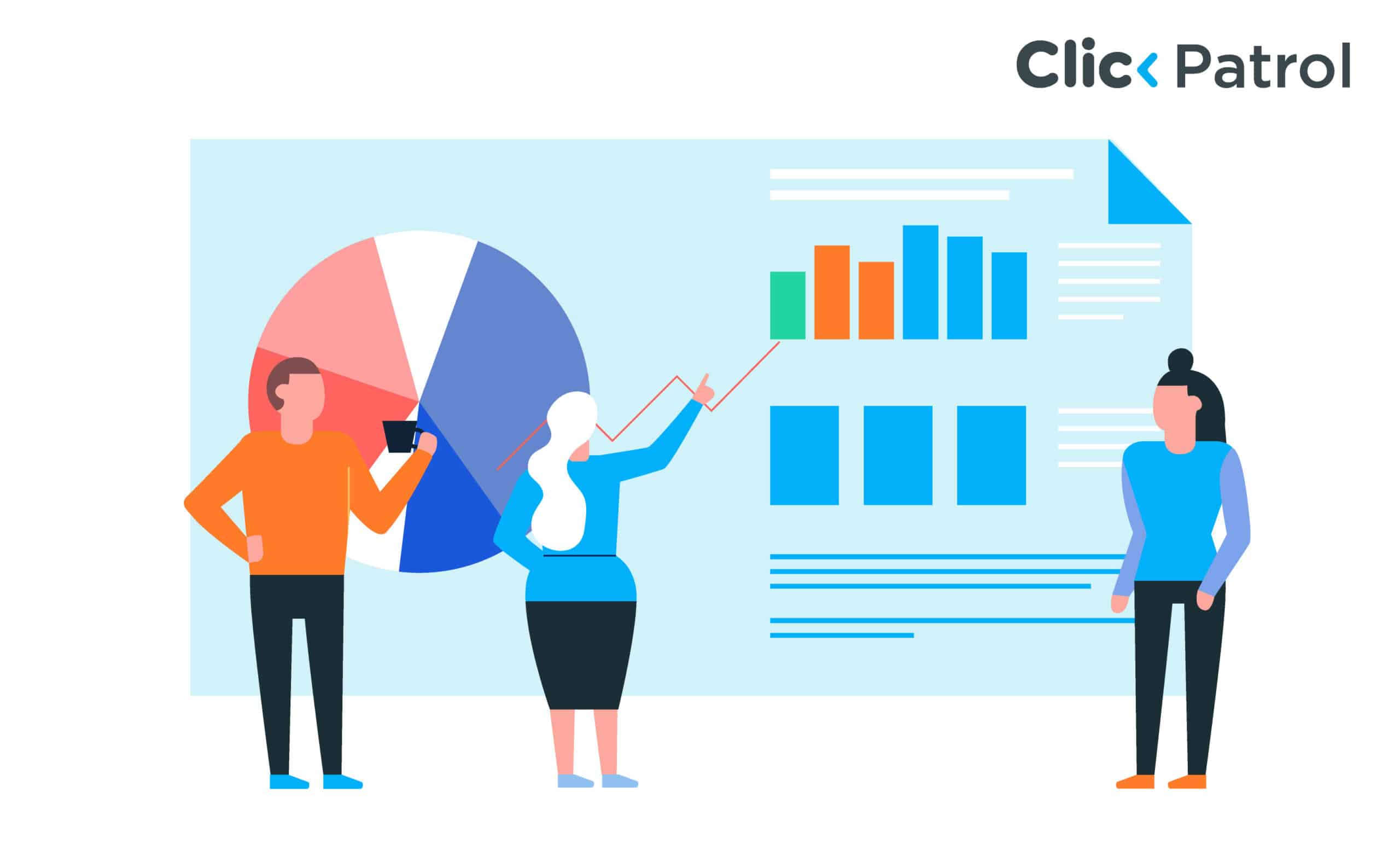
A key component of pay-per-click (PPC) advertising is keyword bidding, which allows companies to bid for ad positions in search engine results or other digital platforms. Businesses using effective keyword bidding strategies can see up to 30% higher ROI in PPC campaigns.
This strategic procedure entails choosing and placing bids on business-related keywords, guaranteeing that your advertisements are seen by the right audience when they search for comparable goods or services. This guide covers the types of keyword bidding, strategies for success, and practical tips for maximizing ROI.
Understanding keyword bidding
Fundamentally, keyword bidding determines the highest price they are prepared to pay for each ad click based on particular keywords. Platforms like Google Ads use these bids and elements like ad quality, relevancy, and Bing Ads to decide where to position ads and how much to charge.
An auction between marketers bidding on a term starts when a user searches for it. The highest price is one factor in selecting the auction winner, but ad quality and relevancy are also important.
The mechanics of keyword bidding in PPC campaigns.
Keyword bidding works using the following:
- Choosing keywords: Marketers select keywords that align with their audience and goals based on what customers may search for.
- Setting bids: A fixed bid is the most an advertiser will pay for a click.
- Participating in auctions: An auction begins when a user searches for a keyword. Advertisers compete based on their bid and other factors, such as ad quality.
- Determining ad rank: An ad’s position depends on its rank, which is determined by considering bid price, ad quality, and ad extension impact.
- Paying for clicks: If your ad is selected, you pay for each click, usually just enough to maintain your position ahead of the next bidder.
Overcoming common keyword bidding challenges.
Here are some ways to overcome these issues and ensure better results from your campaigns:
1. Understanding keyword intent
Often, businesses bid on keywords without fully understanding the intent behind those search terms. A keyword can have multiple meanings depending on the user's query. For example, someone searching for "best smartphones" might be in the research phase, while someone searching for "buy smartphones" is more likely to convert. Understanding the user's intent behind the search is crucial for better targeting.
- How to overcome: Invest time analyzing search intent and grouping keywords by their buyer stages (awareness, consideration, decision). This will allow you to tailor your bids to match the expected conversion likelihood.
2. Overbidding on low-quality keywords
A common mistake is bidding too aggressively on keywords that are irrelevant to the business or have a low conversion rate. This can quickly drain the budget without yielding much return on investment (ROI).
- How to overcome: Focus on high-intent keywords that are more likely to convert into customers. Use negative keywords to filter out irrelevant traffic, and adjust your bids to focus on terms that consistently lead to conversions.
3. Inconsistent keyword research
Keyword trends can change quickly, and failing to keep up with them means you're missing out on valuable opportunities or wasting money on keywords that are no longer relevant.
- How to overcome: Conduct keyword research regularly to identify emerging trends. Use tools like Google Ads' Keyword Planner or SEMrush to find long-tail keywords or trending phrases that match your audience's needs.
4. Lack of geographic targeting
If you run a local business, bidding on keywords without targeting specific regions can lead to irrelevant clicks. Broad targeting may drive traffic, but it's unlikely to convert well if the visitors are not within your service area.
- How to overcome: Implement geographic targeting in your bidding strategy. By narrowing down your audience, you ensure that your ads are shown to people who are more likely to engage and convert.
5. Ignoring device targeting
Different devices can lead to varying results. People searching on mobile devices may behave differently than those searching on desktop, yet many campaigns do not adjust bids based on device preferences.
- How to overcome: Optimize your keyword bids based on the device being used. For example, if mobile users tend to convert more, increase your bids for mobile devices to capture more of that traffic.
6. Failing to optimize ad copy and landing pages
Even the best keyword bidding strategy will not help if the ad copy and landing pages are not optimized for conversion. Irrelevant or poorly written ads can discourage potential customers, making your bidding efforts ineffective.
- How to overcome: Ensure that your ad copy is compelling and relevant to your target keywords. Likewise, ensure that the landing page delivers on the promise made in the ad and is optimized for user experience and conversion.
7. Underestimating the competition
In highly competitive industries, keyword bidding can become a race to the top of the search results. If you do not keep track of your competitors' bidding strategies, you might be outbid or wasting money on irrelevant terms.
- How to overcome: To stay ahead of the competition, regularly monitor competitor activity using tools like SpyFu or SEMrush. Adjust your bids accordingly, and consider targeting less competitive, long-tail keywords for a higher ROI.
Different kinds of keyword bidding techniques
Businesses can select the best strategy for their goals by being aware of these tactics.
1. Manual CPC bidding
This method gives advertisers complete control over their bids for every keyword. It is excellent for small businesses or advertisers with small budgets who want to ensure budget efficiency and micromanage their campaigns.
- Real-world example: A retail business, for example, improved its ROI by 20% by using enhanced CPC bidding. The company carefully monitored its keyword performance and adjusted bids for high-converting keywords, leading to more relevant traffic and improved conversions.
Pros:
- Full control: You have complete command over your bidding strategy. This is an excellent option for advertisers who want to micromanage their campaigns.
- Budget efficiency: You can allocate your budget more precisely, ensuring you spend only where you want to.
- Targeting: Allows businesses to bid more aggressively on well-performing keywords while being conservative on less profitable ones.
Cons:
- Time-consuming: This bidding method requires constant attention to adjust bids based on keyword performance. Without regular updates, it may lead to inefficiencies.
- Ongoing supervision: You need to continually assess your keyword performance and adjust bids to maintain a competitive edge.
Challenges:
- Overbidding: If you set bids too high, you could waste your budget without improving results. This is often seen when advertisers are overly aggressive, particularly for highly competitive keywords.
- Underbidding: Conversely, setting bids too low can reduce your ads' visibility. In highly competitive markets, underbidding may cause your ads to get lost in the crowd, reducing your chances of gaining clicks.
Google Ads’ documentation on bidding strategies emphasizes the importance of striking the right balance to maximize results. Manual CPC allows advertisers to experiment with their bids for each keyword, but caution is needed to avoid overspending or missing out on valuable clicks.
2. Enhanced CPC (ECPC)
ECPC instantly modifies your manual bids to improve the chance of conversions. The platform uses data to bid higher or lower as necessary, but you still set a maximum CPC. This is ideal for businesses that want to combine the benefits of manual bidding with the advantages of automation to improve conversions.
Features:
- Automatically adjust bids based on real-time data to maximize conversions.
- Works within the manual CPC setup but uses machine learning to fine-tune bids.
Example: An online retailer running seasonal promotions might use ECPC to automatically adjust bids for top-performing products while maintaining control over the maximum bid.
Limitation: Conversion tracking is necessary for effectiveness; if the system lacks enough data or proper tracking setup, the adjustments might not be as efficient.
- Pros: It strikes a balance between automation and manual control.
- Cons: Conversion tracking is necessary for effectiveness.
3. Target CPA (Cost Per Acquisition)
This automated approach aims to provide conversions at a predetermined cost. The technology maximizes conversions while modifying bids to reach your CPA target.
Features:
- A fully automated strategy that sets bids based on your target cost per acquisition.
- It is ideal for campaigns that aim to drive conversions at a specific cost, such as signing up new customers or getting a purchase.
- Pros: Focuses on conversions instead of clicks.
- Cons: There is little control over bids for certain keywords.
Example: A subscription-based service, such as a fitness app, could use Target CPA to ensure they are acquiring customers at a set cost per sign-up.
Limitation: Limited control over individual keyword bids and may not perform well without a sufficient history of conversion data to guide bidding decisions.
4. Target ROAS (Return on Ad Spend)
Using your goal return as a guide, target ROAS bidding modifies bids to optimize revenue. It is perfect for companies that prioritize profitability and ideal for E-commerce brands or businesses that prioritize revenue and profitability over traffic or clicks.
Features:
- Focuses on maximizing revenue by adjusting bids to achieve a specific return on ad spend (ROAS).
- Optimizes bidding for higher-value conversions.
Example: A high-end electronics brand might use Target ROAS to ensure its bids are optimized to attract customers with high-value transactions, such as expensive gadgets.
Limitation: This strategy requires precise conversion value tracking, which might make it ineffective. Without clear conversion paths or diverse product pricing, it may also not work for businesses.
- Pros: Aligns closely with revenue goals.
- Cons: Needs precise conversion value tracking.
5. Maximize clicks
This tactic aims to maximize clicks while staying within your budget. It can increase website visitors, making it ideal for businesses looking to boost brand awareness.
Features:
- A fully automated strategy aimed at getting as many clicks as possible within the set budget.
- Great for campaigns focused on driving visitors to a website or generating brand awareness.
Example: A startup launching a new product might use Maximize Clicks to generate high traffic to its landing page, hoping to convert these visitors into customers later.
Limitation: This strategy prioritizes quantity over quality of clicks. You might get many clicks, but not necessarily from the most qualified or interested customers.
- Pros: Easy and efficient for raising awareness.
- Cons: Quantity may be given precedence over quality.
6. Maximize conversions
This automated technique aims to maximize conversions while staying within your budget. The platform optimizes bids by utilizing machine learning. Ideal for sales-driven businesses or lead-generation campaigns that want to maximize conversions while staying within their budget.
Features:
- It uses machine learning to adjust bids and maximize conversions automatically.
- Great for businesses looking to get the most out of their budget by driving as many conversions as possible.
Example: A real estate agency might use Maximize Conversions to ensure its ad spend is directed toward generating leads for property inquiries.
Limitation: Efficient optimization depends on having enough historical data to guide the algorithm; without sufficient data, the strategy may not perform optimally.
- Pros: Excellent for sales efforts and lead development.
- Cons: Efficient optimization relies on sufficient historical data.
7. Target impression share
This tactic guarantees that your advertisement appears in a certain percentage of auctions, such as at the top or on the first page, for companies concerned with brand visibility. It is ideal for brands focused on increasing visibility and brand recognition rather than immediate conversions.
Features:
- It guarantees that your ad will appear in a certain percentage of auction opportunities, such as at the top of search results or on the first page.
- Perfect for businesses that want to maintain high visibility in competitive markets.
Example: A national clothing retailer may use Target Impression Share to ensure its ads are shown at the top for relevant searches, improving brand visibility across the market.
Limitation: While it increases visibility, it may not prioritize conversions or ROI. You may spend more on impressions without getting the desired customer actions.
- Pros: Great for increasing brand recognition.
- Cons: Conversions and other direct ROI measures need more focus.
Comparison table: Bidding strategies
| Strategy | Ideal For | Key Benefits |
| Manual CPC | Small budgets, tight control | Full customization of bids |
| Enhanced CPC (ECPC) | Conversion-focused goals | Balances automation with manual control |
| Target CPA | Conversion-focused goals | Maximizes cost-efficiency for conversions |
| Target ROAS | Revenue-focused companies | Optimizes revenue based on your target return |
| Maximize Clicks | Brand awareness, traffic goals | Maximizes clicks within budget |
| Maximize Conversions | Sales and lead generation | Maximizes conversions with machine learning |
| Target Impression Share | Brand visibility | Ensures ad appears in top auction positions |
Factors affecting the success of keyword bidding.
Several factors affect keyword bidding success, including
- Quality score: Google Ads gives your ad a quality score that affects your CPC and ad rank. It is determined by factors like:
- Relevance of your ad to the keyword.
- Click-through rate (CTR).
- Landing page experience.
- Competition: CPCs are generally higher for highly competitive keywords. Long-tail keyword research and targeting can frequently produce more significant results at a cheaper cost.
- Budget: Your total budget determines how aggressively you can bid. It is essential to strike a balance between sustainable spending and high bids.
- Conversion rate: If your advertising has a high conversion rate, you can pay more for keywords because you will know the return on investment will be worth it.
- Ad extensions, like site links and callouts, can improve your ad rank by making your ads more engaging and informative.
Best practices for keyword bidding
Best practices for keyword bidding include doing careful keyword research, adjusting bids based on factors like time and audience, testing and improving ads often, watching what competitors are doing, using automation where helpful, and focusing on ROI instead of just the cost per click.
1. Perform in-depth keyword research.
Choosing the right keywords is the first step in successful keyword bidding. With the aid of programs like SpyFu, Semrush, or Google Keyword Planner, you can find:
- High-volume keywords with low competition.
- Long-tail keywords are particular and often cheaper.
- Negative keywords help prevent wasting ad spend on irrelevant searches.
2. Make use of bid adjustments.
You can modify bids according to audience, time of day, location, and device type using platforms such as Google Ads. For instance:
- Increase bids for mobile users if they are more likely to convert.
- Lower bids during off-peak hours to save budget.
3. Test and Optimize
Improving outcomes requires A/B testing ads and modifying bids based on performance data. Metrics such as conversion rates, CTR, and CPC should be regularly checked.
4. Monitor competitor activity
Monitor your competitors' bidding tactics to spot new opportunities or potential dangers. Using tools like SpyFu, you can discover which keywords your rivals focus on.
5. Make use of automation.
Automation can increase productivity and save time, but manual bidding still offers you control. Techniques such as Target CPA or Maximize Conversions allow machine learning to optimize your bids.
6. Pay attention to ROI, not just CPC.
Better performance does not correlate with a low CPC. Pay attention to data like cost per conversion and overall return on investment to ensure your campaigns are lucrative.
Difficulties with keyword bidding
Difficulties with keyword bidding include managing:
- Fake clicks: Clicks from rivals or bots cause prices to rise. Programs like ClickPatrol help detect and prevent fake clicks.
- Budget constraints and dynamic competition can quickly deplete your budget as keyword prices and competition levels change, requiring ongoing monitoring and adjustments.
- Over-reliance on automation: Although automation makes bidding easier if it is outside your overall strategy, it may produce less-than-ideal results.
The function of negative keywords in keyword bidding
Negative keywords help optimize keyword bidding by preventing ads from showing on irrelevant searches and focusing the budget on clicks that are likely to convert.
Advantages of negative keywords to keyword bidding
The advantages of negative keywords include:
- Enhanced ROI: You may make sure your money is spent on essential clicks by removing low-value traffic.
- Increased CTR: Your click-through rate will rise if you display advertisements to a more relevant audience.
- Improved ad relevance: By avoiding pointless searches, you can ensure your advertising better reflects user intent and raises your quality score.
- Cost-effectiveness: By removing pointless clicks, you may spend less on wasted advertising and redirect money to more lucrative keywords.
Effective keyword bidding
Keyword bidding is both art and science. It requires data analysis, strategic thinking, and continuous optimization. Businesses can optimize their ad expenditures and attain quantifiable outcomes by picking the proper keywords, deciding on a suitable bidding strategy, and monitoring performance indicators. Understanding keyword bidding is crucial for maintaining competitiveness in the PPC market, regardless of company size.
Start optimizing your PPC campaigns today. Use tools like Google Ads Keyword Planner for more innovative bidding.
FAQs
Q. 1 Is keyword bidding beneficial for small businesses?
Yes. Small businesses can use keyword bidding to compete effectively by targeting long-tail or niche keywords, intelligently allocating funds, and refining ads with negative keywords.
Q. 2 How do platforms like Google Ads determine CPC?
A combination of your bids determines CPC, your ad's quality score, and your competitors' ad rank. You frequently pay less than your maximum bid to keep your position ahead of the next highest bidder.
Q. 3 What are long-tail keywords, and why are they cost-effective?
Long-tail keywords are specific, longer search phrases that attract a more targeted audience. They are cost-effective because they face less competition, leading to lower cost-per-click (CPC) rates. Additionally, they tend to have higher conversion rates, as users with specific searches are closer to making a purchase.
Q. 4 How does keyword bidding differ across platforms like Google Ads and Bing Ads?
Due to its more extensive audience, Google Ads generally have higher competition and CPC. It offers more advanced bidding strategies. Bing Ads has a lower CPC due to less competition and a smaller audience. This makes it a more budget-friendly option with similar bidding features but more straightforward overall.