


Check for unusual click volume, low conversion rates, high bounce rates, or rapid budget exhaustion. These are common indicators of bot traffic.
- Solution for
-
About ClickPatrol™
-
 About ClickPatrol™
Who are we and read about our mission.
-
Affiliate Program
Sign-up for our affiliate program, we love to partner up with you.
-
Request Demo
Fill in this form to receive a demo and more information.
-
-
Resources
-
FAQ
Everything you need to know & answers to all the common questions.
-
Case Studies
See why agencies and business owners use ClickPatrol to protect their ads.
-
Customer Reviews
Customer Reviews and Success Stories of the ClickPatrol community.
-
Blog
Read articles and guides by our expert content team.
-
- Pricing
- Sign in
- Start My Free 7-Day Trial
Fake click generator bots: How they evolved and why they’re harmful to ad spend
Abisola Tanzako | Feb 06, 2026
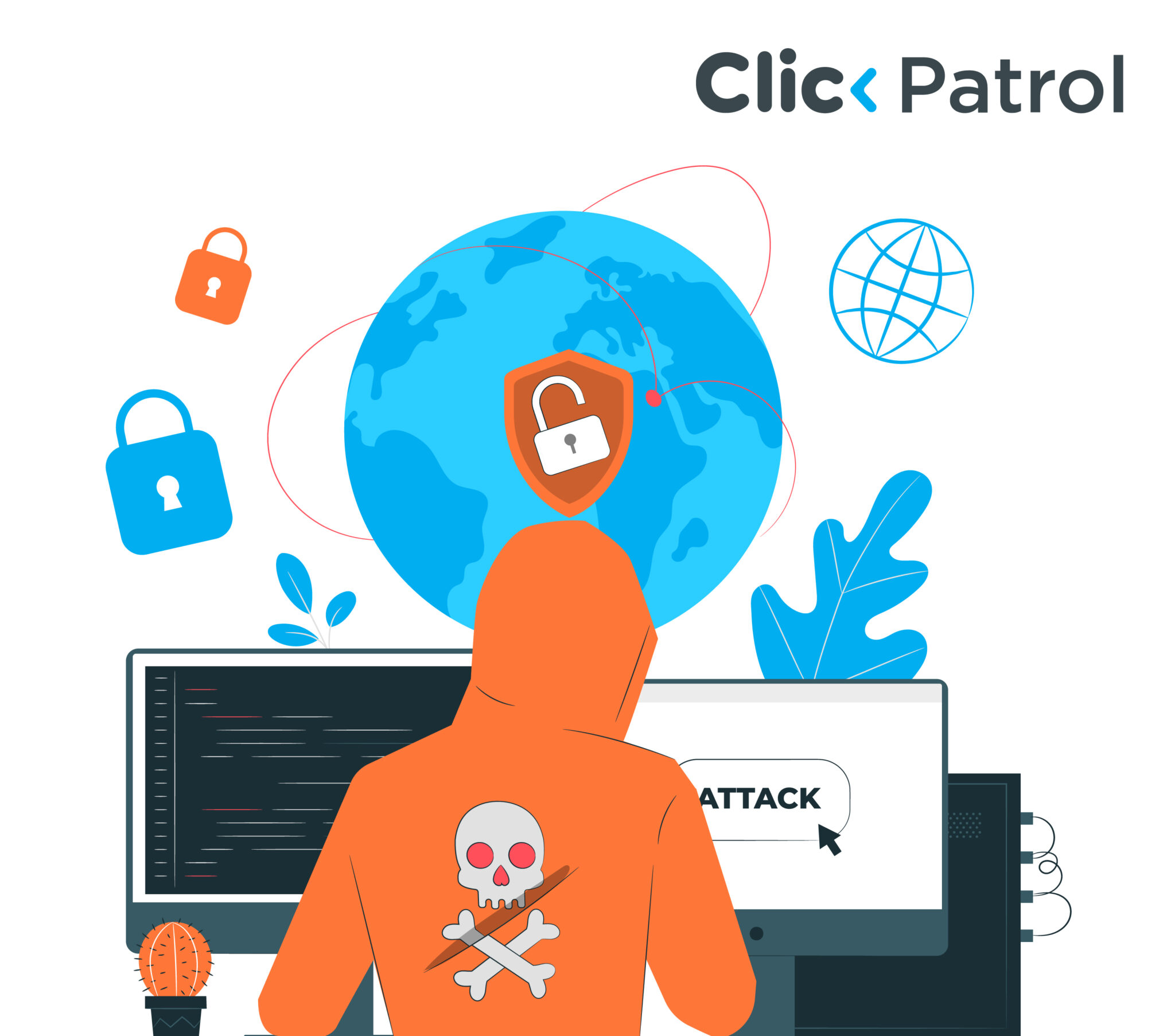
Table of Contents
- What are fake click generator bots?
- The evolution of fake click generator bots
- How fake click generator bots operate
- The scale of fake click generator bots: Key statistics
- Why fake click generator bots are dangerous
- How ClickPatrol stops fake click generator bots at the source
- Best practices for mitigating fake click generator bot traffic
- Winning the fight against fake click generator bots
Fake click generator bots, designed to commit ad fraud and inflate traffic metrics, represent a massive, growing threat to digital advertising.
In 2023, approximately 22% of global ad spend was lost to ad fraud, with projections estimating these costs will reach $172 billion by 2028.
These are automated software programs that mimic human interaction and create artificial traffic, thereby affecting ad metrics and wasting advertising dollars.
This article will examine the evolution of fake click generator bots, the risks they pose to digital marketers, and how ClickPatrol helps prevent such invalid traffic.
What are fake click generator bots?
Essentially, the main idea behind developing fake click generator bots is to create software that simulates human interaction with digital advertisements and web content.
This includes activities such as clicking on pay-per-click advertisements, playing video advertisements, or filling out forms, all without human interaction.
This leads advertisers to waste their budgets on non-legitimate activities. These bots can operate individually or in groups, known as botnets, where infected or artificially controlled devices work together to generate fraudulent clicks on a massive scale.
This is possible because the bots are automated, allowing them to create thousands or even millions of interactions within a short period.
The evolution of fake click generator bots
To understand the menace that fake click generator bots pose today, it is necessary to trace the evolution of click fraud from simple human intervention to sophisticated automated click-traffic manipulation.
Early days: Manual click fraud (Early 2000s)
In the early days of online advertising, click fraud was primarily committed by humans.
Publishers or competitors would click on ads to increase their own earnings or reduce competitors’ ad spend.
Although effective, it was also inefficient and highlighted flaws in the pay-per-click model.
As online advertising grew, click fraudsters began creating simple automated scripts, the precursor to fake click generator bots, to automate the process of clicking on the ads repeatedly.
The First Click Bots: Clickbot.A (2006)
Among the first large-scale automated click fraud systems was Clickbot.A that was found in 2006.
This botnet has compromised tens of thousands of computers and automatically created PPC clicks.
In a month, it started with nearly 100 infected machines and grew to over 100,000, demonstrating how quickly fake click generator bots can spread across networks.
This was a shift from manual fraud to bot-assisted click abuse.
The rise of advanced click generator networks
With the development of technology, fake click-generating bots have become trickier.
Through malware-controlled botnets, they started to imitate human behaviour to evade simple fraud filters. Notable examples include:
- DNS Changer (2007-2011): Compromised millions of computers and sent users to websites with a lot of ads to produce fake impressions and clicks.
- Bamital (2009-2013): Stole search engine results and threw people into fake advertising networks.
- Chameleon Botnet (2013): Logged in as a fake user, browsing history to create billions of interactions every month.
Methbot and the hyper-realistic click fraud era
These fraudulent websites and IP addresses were used by Methbot between 2015 and 2017 to simulate premium ad traffic.
Methbot employed more than 500,000 IP addresses and thousands of fake websites. It boasted of 200-300 million fake video ad views daily at its peak.
3ve and bot-driven click fraud expansion
These methods were later expanded by the 3ve botnet (2013-2018), which used millions of infected devices to generate enormous amounts of fake clicks. The evolution is clear:
- Manual clicking
- Basic automation
- Botnets at scale
- Smart fake click generator bots.
Today’s bots are IP-rotating, human-impersonating, and some even fake-conversion-making, making click fraud a complex business crafted to take advantage of people in the digital advertising industry.
How fake click generator bots operate
Contemporary fake click generators range from relatively simple scripts to sophisticated autonomous systems that simulate human interaction patterns. They might take advantage of one or more of the following methods:
- Botnets: Collections of compromised machines (including personal computers and IoT devices) that have malware installed on them and coordinate to provide scale in terms of clicks.
- Humanoid behavior: Sophisticated bots track mouse movements, scrolling, dwell time, and artificial pauses in decision-making to mislead simple bot detectors and make traffic appear human.
- Residential proxies: Bots route traffic through real residential IP addresses so that each click appears to originate from a unique “real” user.
- Device fingerprint spoofing: By masking device attributes, bots can present themselves as different users across sessions, making detection much harder.
- Fake conversions: There are even fake conversions, where some bots submit fake lead forms or full conversion actions to make their traffic appear real, and even program automated bidding systems to prefer bot traffic.
The scale of fake click generator bots: Key statistics
The magnitude and scale of fake click generator bots are simply astounding, as they have nearly infiltrated all the nooks and crannies of digital advertising:
- Automated web traffic constitutes about 38% of all web traffic, and malicious web traffic constitutes 24% of that traffic, mostly used in fraud and theft.
- In paid search campaigns, about 14% of clicks are non-authentic, i.e., advertisers pay to get invalid clicks that do not produce real value.
- It indicates high fraud because at least 15% of sponsored traffic cannot be considered legitimate.
- On-demand services are among the industries where the fraud rate can reach 60%, significantly disrupting campaign performance.
- The amount lost to ad fraud worldwide will increase to 100 billion by 2025, up from 19 billion in 2018.
- According to marketers, bots (good and bad) account for close to 50% of internet traffic, and only about 49% is actual human traffic.
These numbers indicate that fake click generator bots are not merely a threat but a structural problem that undermines integrity in the digital advertising infrastructure and deprives businesses of real opportunities.
Why fake click generator bots are dangerous
The fact that fake click generator bots do exist, and not only are technical curiosities, but can also have a very practical impact on businesses and the digital economy:
Wasted advertising spend
Every fake click costs money. When bots click on ads, marketers pay for interactions that have no chance of converting into customers.
For campaigns with limited budgets, bot traffic can quickly exhaust the daily spend, leaving no budget for genuine prospects.
Distortion in analytics and bad decisions
Bots pollute data. Campaign performance metrics, including click-through rate (CTR), bounce rate, conversions, and cost per acquisition (CPA), are unreliable when a significant share of traffic is fraudulent.
This leads marketers to make optimization decisions based on misleading signals, a phenomenon sometimes referred to as data poisoning.
Distrusted optimization algorithms
Modern campaign tools use machine learning to allocate budget and target audiences. Algorithms can strengthen their reward to audiences that are mostly fake when they develop patterns perceived as positive interaction.
This is known as algorithmic drift, and it may lead automated bidding to be optimized for fraud rather than actual users.
Reduced reach to real audiences
Bots eat impressions and clicks, which means that valid potential clients are less likely to see your adverts. It implies fewer real interactions, fewer leads, and conversion losses.
Brand reputation and loss of trust
Huge amounts of bot traffic may indicate to ad platforms that your content is inefficient or irrelevant, damaging quality metrics and position.
This may hamper the work of subsequent campaigns and undermine the trust in the digital strategy.
Compliance and privacy risk
Some bots post fake lead information with real personal information. This not only contaminates CRM systems but may also raise regulatory or privacy issues if not properly managed, particularly when data protection laws are strict.
How ClickPatrol stops fake click generator bots at the source
This is where ClickPatrol’s approach becomes invaluable. ClickPatrol identifies and blocks invalid traffic at the point of origin, before it can corrupt analytics and increase ad cost.
Instead of being reactive, such as offering refunds or blocking post-clicks, ClickPatrol is proactive in detecting the patterns of bot activity and blocking fake click generator bots in real-time.
The main benefits of this strategy are:
- Source-level detection: Bot detection relies not only on IP addresses but also on behavioral patterns, so ClickPatrol can identify advanced bots that use proxies or mimic human behavior.
- Fewer budget waste: Click Patrol saves day-to-day budget on authentic engagements by filtering out fake clicks before charging advertisers.
- Clean data: Marketers will have confidence in their analytics and make informed decisions with the data they have, since bots are no longer an issue.
- Optimization across the board: Algorithms based on algorithmic bidding work correctly on conversion data that models real user behavior and spend budget more wisely.
Best practices for mitigating fake click generator bot traffic
Although such tools as ClickPatrol are crucial, proactive actions can be taken by the marketers to minimize the effect of fake click generator bots:
- Frequent traffic audits: Examine traffic data to identify abnormalities like excessive CTRs that have not been converted.
- Add bot-detection scripts: Use detection libraries that examine behavioral patterns during page load and interactions.
- Block suspicious traffic: Block any type of traffic that is not characteristic of your audience.
- Keep a close eye on campaign performance: Sudden spikes in clicks without corresponding conversions are a red flag.
- Use multi-layered defenses: Combine real-time bot filtering with post-click analytics checks to cover multiple threat vectors.
Winning the fight against fake click generator bots
Fake click generation bots have moved beyond basic manual abuse to sophisticated systems that simulate human activity and exhaust ad budgets on a mass scale.
Their effect goes beyond waste of spending, as they provide faulty analytics, inaccurate optimization algorithms, and reduced actual customer reach.
Digital advertising is becoming more popular, and the volume of fraudulent traffic is evolving, so proactive protection has never been as necessary as it is now.
ClickPatrol’s solution to this dilemma is to prevent and block invalid traffic at its source, ensuring cleaner data and improved campaign performance.
Don’t let fake clicks undermine your results. Start protecting your ad spend with ClickPatrol today and take back control of your traffic.
Frequently Asked Questions
-
How can I determine if fake click generator bots are impacting my campaigns?
-
Can fake click generator bots be totally prevented?
Fraud cannot be fully prevented, but ClickPatrol’s invalid traffic protection tools can effectively eliminate it in real time.



- Chamber of Commerce: 71448519
- VAT: NL858719423B01

-
- Get Started
- Plans & Pricing
- Start Your Free Trial
- Book a Demo
- Sign in
-
- Partners
- Become Affiliate
- For Agencies
- For Brands
Trusted by 4,100+ websites worldwide